Just in time for Halloween!

Jitter-2-cover-bookstore

Just a quickie to let y’all know issue #2 of Jitter Magazine hit newsstands today (do any of you have newsstands where you live? I’m not sure if I’ve ever seen one in person, other than at an airport—inquiring minds want to know!), and features my short story Randy’s Bad Day, as well as 18 other stories and poems from the world of horror.

Perfect timing, really. Get yourself in the Halloween spirit—read yourself some scary stuff and get your spook on here:Jitter Magazine #2.

(Did I really just write ‘get your spook on’?)

Jitter-2-cover-bookstore

A Simple Plan by Scott Smith (1993) — I’ll Try Not to Gush

Since I started reading a lot again a couple of years ago, I’ve read some pretty good books. Even a few really good books. But I hadn’t read one that really floored me, leaving me in awe of what a brilliant piece of work it was. Until now.

Unknown

A Simple Plan tells the story of three men in rural Ohio who find a plane with $4.4 million (along with a dead pilot) at a crash site  in a snow-covered nature preserve: there’s Hank, the mild-mannered accountant whose first instinct is to give the money back; Jacob, Hank’s older, alcoholic, loser brother; and Lou, Jacob’s best friend who also just happens to be up to his armpits in debt and is the first one to suggest that they should split the money.

Hank (being the de facto smart one in the group) decides that he will sit on the money for six months while they wait for the snow to melt and the plane to be discovered, then watch the news for reports of the missing money. If, after the six months is up, no one seems to be looking for the loot, they split it up three ways and all become instant millionaires.

See? Simple.

Unknown-3

Needless to say, it doesn’t take long for the shit to hit the fan and their simple plan to go out the window. In my head while I was reading, I wondered what the worst case scenario was—how bad things could possibly get. Everything I imagined as the worst possible outcome had already happened by the halfway mark. That left me engrossed in the book in a way I haven’t been since I was a kid, reading Stephen King books late at night on my bed. At one point near the end, I found myself on a lunch break at work reading while I walked to the restroom. I just could not put this book down.

One thing that bugs me about some books is that they strike me as too “writery.” There’s a term for it; it’s called “purple prose”—when an author is overly descriptive and wordy. Scott Smith is the opposite. Like his other novel, the similarly excellent 2006 horror story The Ruins, his writing is very straight forward in a way that never gets bogged down with unnecessary description. And since A Simple Plan is written in the first person, it really felt like the protagonist was sitting there talking directly to you, telling you the story.

Part of the brilliance of the story is the way things seem to unfold organically, gradually getting worse and worse, and the characters reacting accordingly then rationalizing their actions. Hank—and Hank’s pregnant wife—become masters at rationalizing the things they’ve done. It makes you wonder how far normal people can be pushed under extreme circumstances.

Of course, it should go without saying this book is not for everyone. There is A LOT of violence, sometimes quite graphic, and if that’s not your cup of tea you probably won’t like it. In some ways it reminded me of the films Fargo or Very Bad Things, albeit with a much more serious tone.

For me, though, it was a brilliantly told story with an ending that, while not exactly a ‘twist’ ending, you don’t see coming. Once you read it, however, you wonder if any other ending could fit so perfectly. It’s a gut-wrenching conclusion to a story that might make you second guess if you’d ever be tempted enough to think about keeping found money.

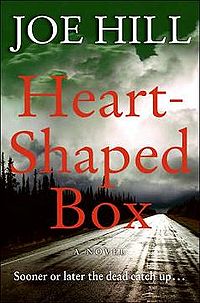
Heart-Shaped Box by Joe Hill (2007) : A Rock ‘n’ Roll Ghost Story

Ghost stories tend to be hit or miss with me. A lot of times I don’t get into them, but if one manages to get its hooks in me, I’ll usually love it. Joe Hill managed to do the impossible and create one that’s smack dab in the middle of the road.

200px-HSBHill

Judas Coyne—not his real name—is a semi-retired, world famous rock star, along the lines of Ozzy, with a taste for the macabre. He has a vast collection of items related to the occult, voodoo, and witchcraft, so when Jude, as he’s mostly called, is alerted to an online auction claiming to sell a haunted suit, he buys in instantly, no questions asked. When the suit arrives (in a heart-shaped box, as suits do), it doesn’t take long before Jude starts seeing the ghost of a creepy old man dressed in the suit and swinging a pendulum-shaped razor blade hanging on a chain. From there so begins the journey to find who the old man is, why he’s haunting Jude, and, as things escalate, how to stop him.

The book starts like gangbusters. Sometimes ghost stories—and haunted house stories, for that matter—go for the slow burn, building anticipation until there’s a grand reveal. With HSB, Joe Hill gives us the ghost in the first few pages and we’re off to the races, which I really appreciate. I like books that just kick right off without any mucking around.

The ghost is/was a hypnotist, and has a strong power of suggestion, putting thoughts in people heads in an attempt to influence their actions. There’s some excellent creepy imagery tied to this, in the first half especially, including a scene involving Jude’s girlfriend watching a snuff film with a gun in her mouth that made my skin crawl. Once we hit the midway point, however, the book falters a little.

Jude and his girlfriend, Georgia/Marybeth, head out on a road trip (with his two dogs, who play an important role) from Jude’s home in upstate New York down to Georgia, Florida, and ultimately Louisiana, in an attempt to stop the ghost. There are some pretty decent moments throughout the second half, but nothing that matches the scare and creep factors in the first half.

It was interesting to read a book with fairly contemporary rock ‘n’ roll references—Rancid, Anthrax, and Trent Reznor are all mentioned in the book, among others—but it seemed to me he was trying to hard to work the whole ‘heart-shaped box’ in there. It felt almost like he’d thought of a good title, one that referenced a popular song (by Nirvana, if anyone didn’t know) and fit the rock aspect of the book, then tried to force it into the story whether it worked or not.

Part of me is glad I read this after reading Hill’s superior last novel, NOS4A2. If I’d read HSB when it first came out, knowing—despite the name change—that it was the debut novel from Stephen King’s son, I’m sure I would’ve been a lot harder on it. But reading it now, knowing what the author is capable of, it’s easier to accept HSB for what it is: a really good—but not great—way to spend a few hours creeping yourself out.

Why Can’t We Be Friends?

If there’s one topic I really don’t enjoy talking about, it’s the “P” word. Some of you who share my propensity for profanity may think you know the word I mean, but it’s not that, perverts.

Politics.

I hate talking about politics and hot-button topics with people. I feel like I have a responsibility to know at least a little bit about what’s going on in the world, or at least our country, so I do what I can to educate myself, and of course I form opinions about issues, but to actually discuss those opinions with others? I’d rather eat an entire cantaloupe (if you knew me, you’d know how grand a statement that is—I hate cantaloupe).

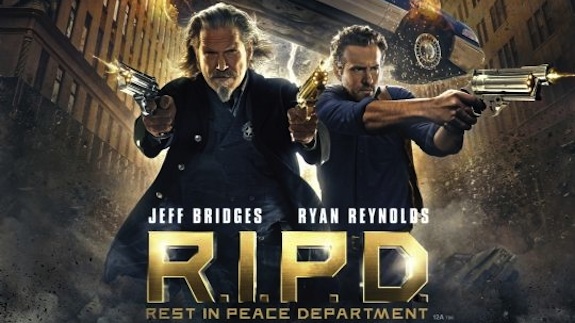
And I don’t just mean I don’t like talking politics with people who don’t agree with me. I don’t even care to talk politics with people who have the same slant as me, either. What I do find interesting, though, is hearing or reading other points of view from a distance. I’m not all one side or the other, and you never know what you might learn. Few subjects are (to me) completely black and white, aside from the fact that R.I.P.D. is a truly awful film, but I digress.

Why have you forsaken me, Jeff Bridges?

I mention all that to relay this: After years of reading a Facebook friend’s political posts (someone I know in real life, btw) that were mostly the polar opposite of my own views, I finally decided to comment on one. I thought maybe we could exchange viewpoints and just have a brief discussion about it. After two comments back and forth that were perfectly civil, some time went by and I noticed there was nothing from this person popping up in my newsfeed anymore (do you see where this is headed?). I decided to check their wall and discovered the person had blocked me. I was surprised, but I guess I shouldn’t have been.

I’m not even sure why I’m writing this. I guess I thought people could still discuss a topic without it affecting their relationship, however slight or casual that relationship may have been. I don’t necessarily tiptoe around social media trying not to offend, but I don’t deliberately try and set people off  by being some kind of repugnant troll, either. The last comment I made to the person who blocked me was along the lines of “maybe people on both sides should try talking to each other—maybe they could each learn something about the other.”

nerve-300x198

Maybe they thought I was being sarcastic, or patronizing, or condescending. It makes me wonder what would happen if I talked about more hot-button issues with people. I know at least two of my longtime friends, going back over 25 years, have very different views than me on most topics, but I can’t imagine any of it being enough to end a friendship over. Maybe that’s just it—we became friends before we’d fully adopted the views we have. At the same time, we almost never talk about politics, either. When you meet someone new, does you view of them change once you learn their political leanings?

Is all of this something new? Surely not, right? Surely people have always been so sensitive about the issues? Am I naive to think people can have differences of opinion without ending friendships, or are my opinions not passionate enough that I would push someone away for thinking differently than I do?

I don’t know.

It just seems ironic that I decided after all this time to dare speak in opposition and immediately get blocked. And despite how it may sound reading this, I don’t really care (I’m not all butthurt, as the kids say). To paraphrase one Facebook friend who had something similar happen, getting blocked/unfriended by some people is sort of like the trash taking itself out for you.

All I know is I’ll probably go back to keeping my political views mostly to myself, however I will say this: If anyone wants to tell me they thought R.I.P.D. was a good movie, you can just go ahead and unfriend yourself. Relationship over. 🙂

10 Books

So there this thing that’s been going around on Facebook. Maybe some of you have seen it—people are asked to share ten books that made an impact on them or stuck with them over the years. I hadn’t participated yet, for a couple of reasons: first, I hadn’t been tagged by anyone, and second, I thought I would have trouble thinking up ten books. Regarding the first issue, well, I’m just tagging myself, I guess. And on the second issue, I took some time to think and came up with my list.

Ten books—not my ten favorite, just ten that stayed with me, for better or for worse. Some are books I like a lot, some not so much. A couple I barely remember reading, a couple are only included for a short story they contain, but they all made an impact, left an impression. So, let’s have a look.

The Dead Zone, by Stephen King — The first book that sprang to mind when coming up with my list. Not my favorite King book, but the first one I read. It hooked me and never let me go, and is a big reason why I became the weirdo I am today.

Tales of Mystery and Imagination, by Edgar Allen Poe — A collection of several of Poe’s best known works. My parents made sure to expose me to the masters, buying me this when I was around twelve or thirteen, in part I’m sure to make sure I understood there was more out there than just some guy named King.

The End of Alice, by AH Homes — I just gave my thoughts on this book recently, so I won’t rehash it all again. I’ll just say it’s an exquisitely written, horrifying, disgusting piece of literature that’s actually really good, if you can stomach it. Love it or hate it, you won’t forget it.

Swag, by Elmore Leonard — As with King, my first Elmore Leonard book holds a special place. Up ’til then, everything I read was horror, suspense, etc. Reading Swag, I realized you could write a book with tension and drama, and still have funny bits that made you smile or actually laugh. I still remember the smile that crossed my lips when I read the last line of this book.

Red Dragon, by Thomas Harris — My all-time favorite thriller. I haven’t read Silence of the Lambs yet, it could be even better, but this first Hannibal Lecter book builds tension like I’d never read before.

Ghost Story, by Peter Straub — The first grown up book I remember reading. I honestly don’t remember much about the book—I had to go to wikipedia to look up what the book was even about—but I remember it scaring the bejesus out of me. After I finished it, I told my parents I liked it and they proceeded to buy me a book I’d seen my teacher reading, called The Dead Zone.

Haunted, by Chuck Palahniuk — Taken as a whole, this book of interconnected short stories is just so-so. But I’d be remiss not to include it for the first story in the book, titled Guts. It’s another that’s so disgusting that you’ll never forget it, even if you want to.

Blood and Gristle, by Michael Louis Calvillo — A book of short stories by my late friend. It’s a nice peek inside a deranged mind, one little snippet at a time. Again though, I’m mainly including it for one piece: the non-fiction essay for which the book is named. It’s his thoughts about life, death, and the afterlife, which I found quite interesting and, since I read it soon after his death, quite sad.

Weaveworld, by Clive Barker — I was obsessed with the movie Hellraiser when it came out back in the 80s. That, along with Stephen King’s claim that Clive Barker was “the future of horror” commanded I buy his books and devour them like an animal. Surprisingly, it turns out I’m not the biggest fan of all his stuff. Nothing against it, just not my thing. I didn’t dislike this book, but I wasn’t crazy about it. The thing about it was it showed me how narrow my scope had been when it came to what horror was and what could be scary.

The Scarlet Letter, by Nathaniel Hawthorne — Forced at virtual gunpoint to read this in the 8th grade, I despised everything about this book. I hated it, hated my English teacher for making me read it, hated Nathaniel Hawthorne for writing it over a hundred years earlier. To be honest, I barely remember anything about it, other than how much I hated it. I think it may be responsible for my dislike of period pieces. Although I didn’t like it, I’ve never forgotten it. Well played, Mrs Roder, if you’re still alive. Well played.

There we have it. Any and all reading this, if you haven’t already, consider yourself tagged. Post it on Facebook and tag me or just put it in the comments. Let me know what books made their mark on you.

Optimism Can Be Exhausting

There are a lot of words that could be used to describe me. For the purposes of this post, though, the word we’ll go with is ‘mellow.

I've been compared to this character on more than one occasion
I’ve been compared to this character on more than one occasion

I may be cynical with a healthy dose of sarcasm, but on the whole I wouldn’t call myself overtly negative. I don’t think most people who know me would think of me that way, either. It’s not that I have no reason not to be—quite the opposite, actually. If I chose to, I’d have plenty of reasons to be pissy and miserable. Without going into too much detail, the last year hasn’t been all puppy dogs and rainbows around here. Truth be told, it’s been a struggle at times, and a different attitude may have resulted in getting pretty down, if not flat out depressed. But I’ve always had an inherent belief—others may call it faith—that things will always work themselves out in the end. I don’t always know exactly how or when, but they just will. And just when I was getting tired of trying to force myself to be optimistic all the time, changes are coming that will make things a little better.

The financial situation around here is poised to take a turn for the better. I know they say money can’t buy happiness, but I believe it can make happiness much more affordable to rent. I’m not really going to go into detail, but it’s been a lean year around the homestead, and there’s finally some relief in sight. It’ll still be tight, but we can finally loosen the belt a notch or two. Yay, money!

rich-guy1
This is not representative of our new financial standing, but I really like this picture.

Also, we’re fast approaching my absolute favorite time of the year. Late September through the end of the year is when I’m usually at my happiest. My birthday is at the end of September (and since hitting the big 4-0 last year this one won’t seem so traumatic), followed by Halloween, Thanksgiving, and Christmas. I’d be hard pressed to say which is my favorite of those holiday. The weirdo in me of course loves Halloween, but I’m also a big fan of Christmas, too.

Aside from the holidays, it’s my favorite time of year because of the weather. In case I’ve never mentioned it before, I hate summers in the Midwest. The humidity makes me want to die, the mosquitos try to eat me alive, then there’s the lawn mowing, yard work, and lest I forget those godforsaken bugs.

But then, around late September, something magical happens. The weather cools off, the grass stops growing, the need for yard work dissipates, and the bugs—although just temporarily—go away. Early fall marks the end of oppressive heat and the start of good things to come: autumn leaves, the eventual first snowfall, and more time to write, which is really what this blog is all about, isn’t it? Something about the cooler (even downright cold) weather just seems to make my brain run better. I tend to want to write more than in the summer, when I feel like I’m forcing myself. Combine that with the extra time to write that the cool weather brings, and who knows, maybe I’ll have a passable draft of this damn novel done by the end of the year.

As tired as I get sometimes of trying to stay positive when things around me suggest I shouldn’t be, I know what’s just around the corner. So I laugh, I make jokes, I stay optimistic, stay a goofball. To do anything else seems unthinkable.

Unknown-3

imagesUnknown-4Unknown-6

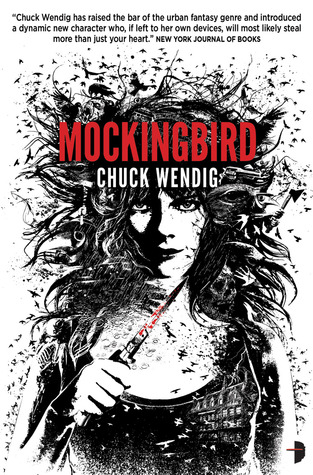
Mockingbird by Chuck Wendig (2012): Like Reading Chili Cheese Fries

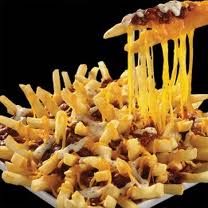
Reading is kind of like eating (just go with me here): Sometimes you want a luxurious, elegant meal by candlelight, complete with fine wine and classical music. Other times you want homestyle meatloaf with mashed potatoes, or chicken fingers, or maybe a big plate of chili cheese fries with an ice cold beer. Mmm…chili cheese fries.

Unknown
Okay, now I’m hungry.

Where was I? Right. Mockingbird, Chuck Wendig’s sequel to Blackbird and book #2 in the Miriam Black saga, is pretty close to literary cheese fries, and I mean that as a complement.

13108221

In this installment, we find Miriam trying to live without relying on her “gift” of being able to see how and when someone is going to die by the mere touch of skin on skin. Frustrated and feeling out of step, Miriam quits her job and goes into a brief tailspin until her on again/off again boyfriend Louis tells her he has a way she can make a few hundred dollars easy—if she wants to go back to her old ways.

Despite knowing taking the job may disappoint Louis, Miriam takes the job and goes to an all-girl reform school to meet one of the teachers and tell her how she will meet her demise. What starts as a simple task quickly turns into Miriam’s gift giving her a horrific glimpse of a serial killer at work. From there it’s off to the races as Miriam must find out who the killer is with very little to go on and stop them before they strike again.

And therein lies the beauty of the story and the genius of Wendig. He takes what could’ve easily been a dull retread of the first book and gives us instead an original story that doesn’t use Miriam’s gift as a cheap gimmick. There were times I actually forgot she had said gift, and when it came into play it was timed brilliantly. The people at the STARZ network evidently agree, as they’ve tentatively agreed to create a series based on Miriam’s adventures. If done right, the show could be great fun to watch.

Another thing I really liked, without giving anything away, is that Wendig leads you to an inevitable climax, then the story reaches that climax and seems to resolve itself at the 75% mark. When you still have that much book left and what you thought would be a somewhat predictable ending has already happened, that keeps you guessing and wondering what on earth is going to happen next. Very cool.

Of course, these books come with the requisite ‘not for everybody’ tag: like the first, the book is peppered liberally with creative uses of profanity, and Miriam is a character with a tongue like a razor blade. At times her dialogue borders on unbelievable, but these books are too much fun for me to care. I should also note that Wendig has other books that deal with the supernatural and is putting out a dystopian young adult trilogy, so if the Miriam Black books don’t sound like your cup of tea don’t dismiss other titles of his without giving them a shot.

Regardless of what happens with the TV deal, there’s already another Miriam Black book out, The Cormorant, and Chuck shows no signs of stopping the series anytime soon. I’ll take my time before I read the next one, though. If I read them too close together I’ll have a long wait before a new one comes out, and that’s no fun. In the meantime I’ll just wait until I have another hankerin’ for chili cheese fries.

Lessons Learned from Listening to a ‘Cool’ Radio Station

It’s amazing to me how even in 2014, in an age of self-driving cars and hyper-realistic sex dolls (clearly the two biggest technological advancements of all time, right?), I can still forget what kind of incredible technology I have at my fingertips.

Growing up in a sparse desert halfway between Los Angeles and Las Vegas, radio was a fickle, fickle thing. Vegas stations were much too far away. The LA stations were attainable, depending on a few things—where your house was located, how good an antenna you had, and just which station you wanted to listen to. If it was classic rock you were after, then you’d have no problems whatsoever pulling in KLOS, which had the strongest signal and could be picked up from practically anywhere in our Mad Max-like wasteland (slight exaggeration). If your tastes were slightly more off center, however, then getting a good radio station became exponentially more difficult.

(I should note, just in case any desert friends happened to be reading, I know eventually X1039 popped up and made things a heck of a lot better, but I’m talking about the harder-to-get stations from the barren, early years before their existence, so bear with me. Also, desert friends: is that still the only ‘local’ alternative station or do you have any actually broadcasting in the Victor Valley yet?)

The radio situation was part of what made going to concerts such a special experience. See, at that point in time you pretty much had to make the 100-mile-plus drive all the way to LA or Orange County to see a band you liked, and that meant you could get all the stations that were faint, static-filled whispers in the night back in the desert. The go-to station would usually be KROQ—er, “The World Famous KROQ” as they’re so fond of saying—an alternative station that played a plethora of music that most stations within our measly desert reception area never touched. You could hear new music, but you could also hear music you actually liked on the radio—something I think people take for granted in the new, Pandora/Spotify era.

The other, even more elusive station was 91X out of San Diego. They were even farther away and it would usually take an extra long trip somewhere far from the desert to be able to pick them up (in my case, anyway). They played an even broader spectrum of music, a lot of which I had never heard of, and they have the distinction of being the first (and only) terrestrial station on which I’ve ever heard the great Morphine, one of my favorites.

Now, back to the present. Cut to three weeks ago. My wife and I had a brief conversation one day about Ye Olden Days of being excited to tune in KROQ or 91X once we’d driven far enough toward civilization, and a couple of days later she casually mentioned that she’d started listening to 91x, streaming it from their website.

I looked at her like a dog when you ask it who sang Purple Haze. “Really?” I asked. “You can just do that?” You see, guys, I was being an idiot. It never dawned on me even once to just go to a radio station’s website and stream their signal. Partially I suppose it’s because the stations here in Wichita are absolutely dreadful, and why on earth would I want to stream them when I can listen to a Pandora station that’s infinitely better? But now, realizing the great brass ring of radio stations was right there this whole time, just waiting for me to tune in…well, I felt pretty dumb and I started streaming 91X immediately. (KROQ requires some app to stream their feed, and said app is the lowest-rated I’ve ever seen in the app store, so they’ll just have to fix their shit before I listen to them anytime soon)

Unknown

It’s been two weeks now of unadulterated, previously unattainable radio, and what have I learned? Let’s see:

Never heard of KONGOS? Give 91X a day, two tops.

I knew vaguely of their song “Come with Me Now” from…somewhere; a commercial or movie trailer or something. It’s an okay song—catchy, not overly poppy, and features slide guitar, a true rarity in today’s music. 91X likes KONGOS A LOT. Not just the one song, either. I’m now familiar with about half their current album. Not that that’s necessarily a bad thing, just sayin’.

They actually play a decent amount of new music.

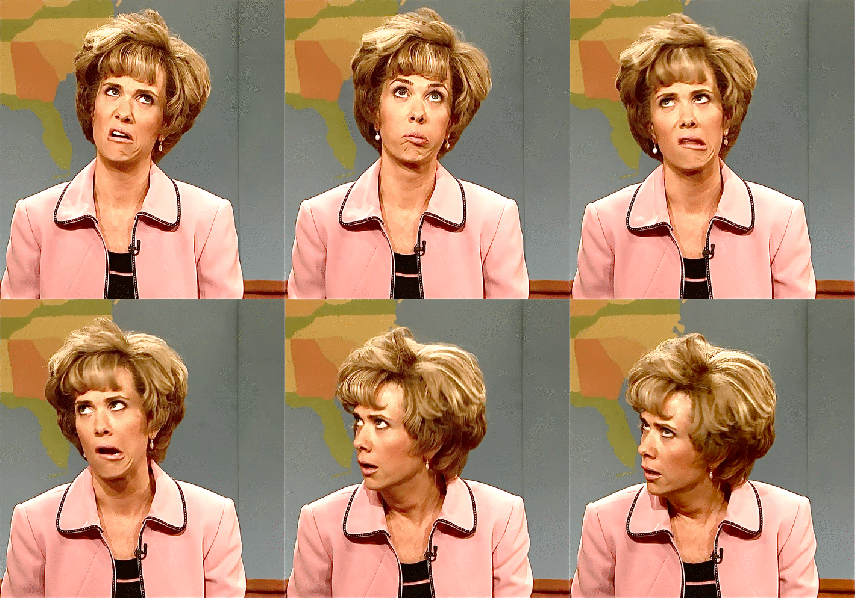
I can’t claim to be the bastion of cool I was in my 20’s (inside joke there for anyone who actually knew me in my 20’s), so I don’t know how obscure or underground any of the new music 91X plays is. The fact is, I don’t really care.  They’re playing music that I’m not familiar with that’s not entirely bad, and some of it is actually pretty good. Most—no, all—the stations here in town can only hold me for about ten minutes or so before they play something that makes me want to puke or pull an “Aunt Linda” from SNL:
tumblr_lxnh18VnYv1qzbcrro1_500


You may wonder why I say they play only a ‘decent’ amount of new music. That brings me to my next point.

They pander to old people like me.

It’s nice to hear an occasional nugget from my youth mixed in with the new stuff; you need something to be able to hum/sing along with once in a while. 91X makes sure to comfort us old folks by playing the likes of Sublime, Offspring, Weezer, Beastie Boys, Nirvana, No Doubt, etc. constantly. Don’t get me wrong, like I said, it’s nice to have the familiar mixed in with the new, but it’s not like they’re playing deep cuts off of the obscure albums or anything like that. In most cases they’re playing the same songs that were played to death 20 years ago. And some of those old bands (*cough-Offspring-cough*) I never liked to begin with.

One thing I have to say about playing old music: even though I’ve never been the band’s biggest fan, I will instantly be a fan of any radio station that plays Violent Femmes, particularly “Add it Up.” They were one of those bands I never heard anywhere but on the cool stations, and while I won’t listen to an entire album of theirs, I like whatever songs get played on the radio.

All in all, it’s been a great time and has made me crave more. And this is where I reach out to you folks.

What’s your favorite (preferably independent) radio station? I’ve noticed some of the differences and similarities between 91X and the ‘cool’ station in Kansas City, 96.5 The Buzz (stupid name, but it doesn’t have an ‘X’ in it). Some songs overlap, but there’s a good number of different artists as well, and that’s where it gets interesting. I want to see what bands/songs the radio station in your town plays. This goes for anyone and everyone reading this, too; not just people who like this kind of music. I’m eclectic, I want to hear it all. Even that handful of you who read from outside the US, if I can stream it, let me know about it.

In the meantime, I’m going to go turn on some tunes and bet my wife how which band 91X plays first: KONGOS or Nirvana.

The Great Bradello

“Sometimes the one with the biggest smile is the one hiding the biggest frown.”

Man goes to doctor. Says he’s depressed. Says life seems harsh and cruel. Says he feels all alone in a threatening world where what lies ahead is vague and uncertain. Doctor says, “Treatment is simple. Great clown, Pagliacci, is in town tonight. Go and see him. That should pick you up.” Man bursts into tears. Says, “But doctor, I am Pagliacci.”

There’s a good chance you’ve seen this joke somewhere online in the last few days. I’d never heard it before—because I’ve never seen Watchmen—but people quickly realized the joke was quite appropriate regarding the passing of Robin Williams and began posting it everywhere.

I’m not going to ramble on about Robin Williams—not because I’m not sad about it or affected by it—quite the contrary, actually. But in this day and age, commenting on something after four days have already passed, well, that’s an eternity in online time. There’s not much I can say that hasn’t already been said.

What I am going to do, though, is share. I wrote a short—very short—story about a year and a half ago that sort of fits the situation. Sort of. I haven’t looked at it in a long time and I’m sure it’s a little rough, but I don’t have a whole heck of a lot else going on that’s really blogworthy, so I thought I’d post it here, now.

It’s not about a clown per se, but a magician named The Great Bradello. Enjoy.

Brad took a sip of his cheap whiskey and looked at the clock. 11:38 am. Time to get dressed for work. He gulped down the rest of his drink and carried the empty glass into the kitchen, shoving a stack of dirty dishes aside to make room.

He ignored the pile of overdue bills on the kitchen table as he walked into his bedroom and pulled out the only clean clothes in his closet: a pair of black dress slacks and a crisp, white button down shirt with long sleeves. Then he grabbed his black dress shoes, polished to a high shine as usual, followed by his cape and black top hat.

As he dressed, Brad couldn’t help running through the argument the night before. The booze wasn’t enough to make him forget about Ashley. The way she’d begun by gently suggesting he needed to “grow up” and get a “real job,” eventually escalating to name calling and yelling, telling him he was a born loser.

The breakup was inevitable, even if she hadn’t started in last night. She just didn’t understand. Still, he already missed her. She was the prettiest girl he’d ever dated, and while they were going out he would imagine how she would look dressed up on stage as his assistant in a big Las Vegas show.

Fully dressed and shoes laced, Brad tied the cape around his neck and donned the requisite top hat before checking his appearance in the mirror.

Spot on.

Outside, a horn honked. Brad pulled back the curtain to see his cab waiting. He turned back to the closet and grabbed his case full of props. He stuck a deck of cards in one pocket and put his ‘never-ending’ handkerchief up his sleeve so he’d be able to pull off a couple of quick tricks right out of the cab.

Looking at himself in the mirror one last time before heading out the door, Brad smiled for the first time in three days.

For the next two and a half hours, he would convince himself that his life was not in ruins; he was not depressed. Brad would convince a birthday party full of children and their parents that life was good and he was happy.

And that was The Great Bradellos’s greatest trick of all.

I realize now this is a fairly depressing post, and I don’t  want anyone to end their week on a sad note, so if you’ve read this far you must now click this link to make sure your weekend starts off right. Seriously, it is required by Books of Jobe administration. Do it. And have a good weekend, everybody.


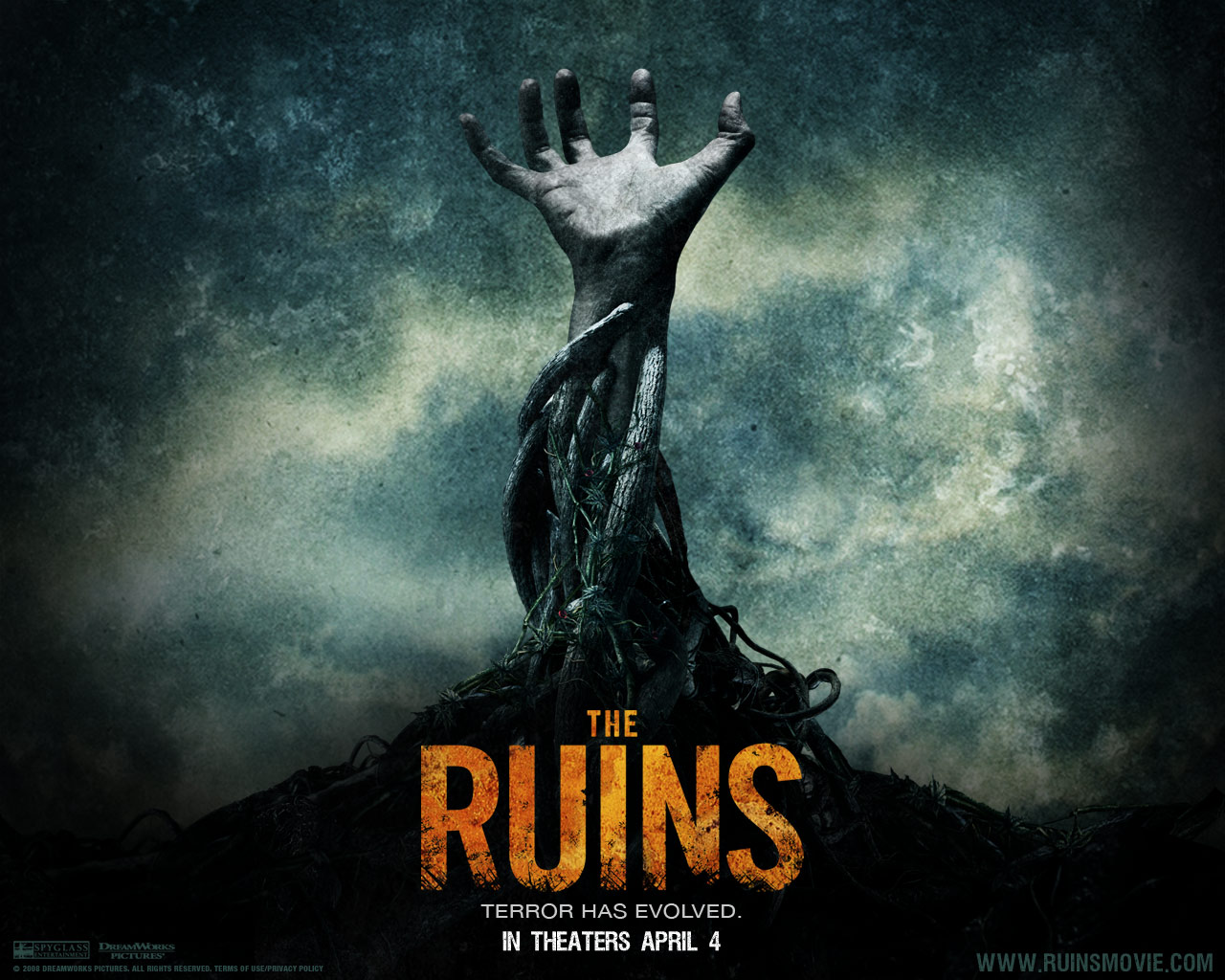
The Ruins by Scott Smith (2006): Making Vines with Pretty Red Flowers Absolutely Terrifying

I’m scrapping my previous book review formula, The Quarterly Book Report. It made for posts that were too long (I felt), and forced me to condense my thoughts on a book down too far. From here on out, I’ll just drop a review randomly as I finish a book, capiche? I finished this book a month or so ago, but since I just decided to scrap the old format I’m reviewing it now.

200px-Ruins_Smith

I watched the movie version of The Ruins a few years ago on cable, and liked it well enough. I remember it being a little cheesy, but in a cool , B-movie kind of way. Ultimately I thought it was ‘just okay.’ Then a couple of years ago when I started really getting into reading again, I wanted to see what had been going on with books in the horror genre, and I found list after list of Best Horror Novels of X amount of years, and The Ruins kept popping up on the lists with the same comment: “The book is so much better than the movie.” Everybody says that about books made into movies, so I didn’t think a whole lot about it until one day, about two months ago, I found The Ruins along with Sharp Objects by Gillian Flynn at my local used bookstore—quite the score indeed.

 The Ruins tells the story of six tourists on a Mexican vacation—four Americans, a German, and a Greek—who embark on an adventure to find the German’s brother, who’s run off with a woman he met and gone to the site of a supposed archeological dig. Following a crude, hand-drawn map, the group takes a bus ride, hitches a ride in the back of a truck (with a vicious dog in tow), and hikes extensively into and back out of a small village before finding a hidden trail.

The trail leads them to an massive hill overgrown with vines with little red flowers. Villagers show up and try to scare the tourists away, but language barriers inevitably lead to mass confusion, and when one of the tourists makes contact with the vines the villagers then force the tourists (at gun and arrow point) to hike the narrow trail leading up the hill. At the top the tourists find a couple of abandoned tents battered by the elements and a few supplies left by whoever was there last.

The first half of the  novel reminded me of a straight-forward survival story. This group of people, stranded with practically no supplies except what they happened to grab before leaving their luxurious hotel—water, a couple of protein bars, some fruit, and a bottle of tequila—and the empty tents and supplies, struggle to survive and find a way off the hill, which remains patrolled by the villagers.

Confident help will arrive in the form of the Greek’s friends (for whom he left a copy of the map), the group tries to make do. At the bottom of a mineshaft the group hears what appears to be a cell phone ringing, and rig up a contraption to lower the Greek down to look for it. The rope they’re using to lower him snaps (due in no small part to the acidic sap of the vines, which has eaten away some of the rope) and the Greek plummets down the shaft, severely injuring himself. The others manage to get him out, and now must contend with caring for a critically wounded person on top of their already surreal dilemma.

To say any more would spoil the book, except to say that the vines turn out to be much more than just acidic. The initial denial the characters feel—how things like this just don’t happen, and their certainty that they will be rescued—is gradually replaced by an overwhelming sense of dread, as they begin to wonder if they will, in fact, die on the vine-covered hill.

Scott Smith’s writing style struck me as sort of minimalistic—almost businesslike. There’s no excessive descriptions or long tangents about things that don’t matter. At over 500 pages I was expecting to skim some passages, but it’s actually a lean, no BS story.

Between Smith’s style and the fact that there are no chapters to separate parts of the book, I initially thought the book was oddly written, but was quickly consumed by the story. In the two years or so since I started reading regularly again, this is easily the best book I’ve read, and although it is classified as horror, I think people who don’t normally enjoy the genre could still get into this book. At one point about halfway through, I was so caught up in the group’s struggles just to survive that I forgot about the vines altogether.

Scott Smith has only written one other novel, his debut, 1993’s A Simple Plan, which Smith himself adapted for the big screen in 1998, directed by Sam Raimi and starring Billy Bob Thornton, Bill Paxton, and Bridget Fonda. I’ve neither read the book or seen the movie, but both are now on my short list of things to read and watch.

There you have it, as high a recommendation as I can give to The Ruins—2 Jobes Up, if you will. Give it a shot and see if you don’t allow a little extra room the next time you walk past your spider plant.

e47eb44aa17b0cabf2a63f52d4d7decc