Demon House

A change in my schedule has landed me temporarily on the night shift and allowed me a relatively large amount of free time during the hours when most people are dead to the world. I’m trying to use that time to get back on the proverbial horse in regard to my writing (of which I’ve done woefully little this year), and started with this relatively simple story. Anyone who knows what I’ve been dealing with the past few months—and the last week in particular—should have no trouble spotting the metaphor.

*********

The foundation had cracks. The floorboards were warped and swollen from moisture. Shingles were missing from the roof and there was a hole over the kitchen where a hailstone the size of a baseball had broken through during  a storm the previous spring.

None of that phased Doug. Nor did the termite damage, the poor insulation, or the rusted old pipes that jetted brown water out of the faucets before clearing up. The first time he looked at the house, the realtor’s apologetic tone fell on deaf ears as Doug gazed at the small patch of blue sky visible through the hail-born skylight.

“It’s perfect, he said. “I’ll take it.”

The realtor’s jaw hung open momentarily. He blinked. “You’ll take it? You want to make an offer?”

“I want the house.” Doug found it difficult to put what he was feeling into words. He looked at the scuffed up wall where an old refrigerator had presumably stood for decades, crying for a fresh coat of paint and gestured around the room. “It’s got character. This is the house for me.”

The realtor was smart enough to keep his mouth shut and get Doug back to the office to start the paperwork before he changed his mind. Fourteen days later, Doug had the keys.

It went smoothly enough, to start. Doug patched up the hole over the kitchen and replaced the missing shingles on the roof, then began slowly replacing floorboards and installing new plumbing. He adored the house in spite of its imperfections. Possibly even because of them. It was about a month after he moved in that the real problems started.

At first it was little things—a faint puff of air that sounded like a whisper but was probably just the wind, things falling off of shelves that he must’ve left too close to the edge—Doug didn’t think much of it. Soon doors started slamming behind him and the faint whispers became moans and groans. Doug got less and less sleep, spending much of the night picking up broken knickknacks, the rest of the time forcing himself to keep his eyes shut while he lay in bed and ignore what was happening around him.

He soldiered on, fixing what he could and picking up the pieces as more broke, never asking himself what he should do about it. Things were just the way they were. He dealt with the issues as they arose and carried on, slowly realizing he was absolutely exhausted. Months went by until one day he mentioned his woes to a coworker who asked him a question profound in its simplicity.

“Why do you still live there?”

Doug frowned. “What do you mean? It’s my house.”

“There are houses everywhere. Literally, everywhere. You can find another. It sounds to me like the one you’re living in has some ghosts—demons.”

The notion hung in Doug’s mind. Was that really all there was to it? Could it be a matter of just finding another place? Something about it seemed to him like cheating, like he was taking the easy way out. Was it really that simple?

Over the next few weeks Doug began to seriously consider moving—usually when he was somewhere else, lest the  house know what he was thinking—and the idea started taking hold, putting down roots in his brain. His co-worker was right, his house was haunted, and he’d gotten so used to dealing with the moans and groans, the slamming doors and breaking knickknacks, that it had become commonplace. The thought of living in a house where those things didn’t happen seemed almost too good to be true.

Doug began mentally taking stock of what he would pack up first and and browsing through the real estate section of the newspaper. Excitement and anticipation grew in his belly as moving out of the ghost-riddled pit that had been his home became closer to being reality.

As if it knew, things began to escalate at the house. One night as Doug was padding into the kitchen for a glass of water, the cabinet door opened and slammed shut hard enough to rattle the windows and the chef’s knife that had been siting on the counter teetered and fell point down, stabbing the top of his foot. Doug shouted a wave of profanities, knowing it was no accident. It wasn’t a coincidence. The house was actively trying to hurt him.

After his second time tripping over and stepping on things in the night that hadn’t been there when he went to bed, Doug slept with all the lights on. He started parking in the driveway after waking one morning to find his car running in the garage and the house filling with exhaust. The house wanted to keep him there, all to itself.

With a lot of searching and a little luck, Doug found a new place. It wasn’t as big or nice as the house he’d be moving out of, but he could feel the different energy in the new place. No ghosts. No demons. Nothing but walls and a roof and a floor.

On each subsequent trip back to the house to pick up the last of his things it got a little harder for Doug to leave. Not necessarily for sentimental reasons but because the house made it physically difficult for him to get out. A bookshelf falling over, blocking the door; his car battery somehow going dead despite being brand new; the couch sliding in front of him when he had his arms full in an attempt to trip him.

The last time Doug was in the house, he was having a look around seeing what was left to be taken out. There were still some things he wanted to grab, but most of the essentials had already been taken to the new place. As he was walking down the hall, Doug noticed a chunk of drywall that had fallen away at some point since he’d been there last, exposing a stud full of rot and mold. Frayed electrical wiring hung haphazardly along the the board. Doug stared wide-eyed at the potential disaster, wondering how he’d lived there as long as he had relatively unscathed.

He reached up instinctively with a pointed index finger to touch the frayed wire then hesitated and took a step back, something telling him to use caution. As if on cue, the wire sparked and Doug recoiled. A second spark shot out and the wire began to smolder upwards. A chunk of the stud crumbled away and a puff of dust floated down from the ceiling, surrounding Doug’s head, and the ominous feeling grew inside him. Something bad was about to happen. Something worse than bad. Another piece of the beam crumbled and the ceiling above him buckled. Doug took a step back and a piece of tile crashed down, landing where he’d been standing five seconds earlier. A faint rumble carried through the house and the rotted, exposed stud gave way. The ceiling fell in a domino effect through the room and Doug took off in a sprint. The house collapsed behind him as he ran. At first he thought it was chasing him out, then he realized he was wrong—he was outrunning it as it tried to trap him inside.

Doug burst through the front door to the driveway, the house quaking on its foundation. He made it to his car before turning back to look, just in time to see the place he had called home collapsing in on itself like it were being consumed by a black hole. A small mushroom cloud of dust plumed up from the rubble, and for a moment Doug considered trying to go back and sift through the debris for anything left that could be salvaged, before wisps of smoke wafted up from the heap. The stuff went up like tinder; flames licked at the dry, brittle wood that had made up its frame, engulfing it all in under a minute. Doug leaned against his car and watched it burn as he called the fire department. He could hear the sirens but there would be nothing they could do. It would be little more than ash by the time they got there.

When he thought back, he had mixed feelings about the time he spent in the house. Although it ended in a flaming pile of rubble he would still always have fond memories of those early days—gazing through the hole in the roof over the kitchen, thinking about all the potential, how much could be done to turn it into the house of his dreams. It didn’t turn out that way, of course. As far from it as you could get, actually. But in the end one thing went through his mind like a gunshot in an echo chamber:

At least he got the fuck out of that godforsaken house before it collapsed and trapped him inside forever.
Remembering Rolonda

Has this ever happened to you: you’re minding your own business, thinking about whatever perfectly normal thing is passing through your head, when next thing you know you’re thinking about someone or something you haven’t thought about in years? Without even realizing what took you there, you’ve somehow been transported to another place and/or time in your life that hadn’t come up in ages? That happened to me yesterday when I found myself thinking about my old coworker Rolonda.

When I worked for my previous employer, I was pretty unhappy. I can be good at hiding it (dare I say a master) so a lot of people never would’ve guessed, but I was depressed and unsatisfied with almost every aspect of my life. The only real bright spot that came from the years at that previous employer was that I rediscovered my writing. Other than that, things were pretty glum. I made a couple pretty good friends that I’ve managed to keep in contact with (and coincidentally or not, we all work somewhere else now–what that might say about said previous employer I’m not sure but I have an idea), but most everyone there were acquaintances at best who I tolerated to various degrees. There were exceptions, of course–people who I didn’t talk to outside work yet enjoyed seeing every day–and one of them was a ball of light and positivity named Rolonda Menifee.

Rolonda was born and raised in Kansas, lived there her whole life, I believe. She worked for a loan company prior to coming to work for the utility company I called home for just over five years. She was practically a walking smile–every time you saw her she was either smiling or about to smile. It wasn’t one of those phony, “Hi, good to see you!” smiles that coworkers get so good at giving each other and don’t really mean. She always seemed genuinely interested in the well-being of whoever she was talking to. A warm smile, a small joke, and a big laugh: the one-two-three combo that could stop any grumpy asshole dead in their tracks.

She complained now and then, like we all do. Show me someone who doesn’t complain about their job from time to time and I’ll show you someone predisposed to keel over with a brain aneurism. She was human. She had a sharp tongue after (or sometimes during, thanks to her phone’s MVP, the mute button) interactions with troubling customers, having those of us within earshot in stitches from her barbed jabs at their expense, but the vast majority of the time she was genuine, polite, pleasant, and just plain kind. I told her once she was nice to customers on the phone even if they didn’t deserve it, to which she laughed that big laugh of hers and told me life was too short to be nasty to people.

Our cubicles were only two down from each other, and we were both notorious for being the last ones on the phone at the end of the day–the two who customers seemed to latch onto, wanting to talk and share way past the point of us caring but us too polite to cut them off. That put the two of us usually being the last two out of the office every day, walking to the elevator together and trekking out to the parking garage chatting about our day, maybe a small amount of idle chit chat about what we were going to do with the rest of our night after we left. Those short walks and pleasant conversations meant a lot to me. They helped me decompress and unwind from my soul-crushing day in mere minutes as much if not more than anything else I did the rest of the night. She really brightened my day every time I saw her

One random Wednesday I walked into the office and could feel something off. There was a weird vibe, a sour feel to the air I could almost taste, that made me uneasy. The supervisors were avoiding eye contact with everyone as much as the could, coming to people’s desks and having them step into their offices in small groups of three or four. Upon leaving the offices, my coworkers’ faces were blank and expressionless, impossible to read. After about twenty minutes of wondering what the hell was going on, I was called into my supervisor’s office with two others.

Rolonda had called in sick on Monday, which, while rare, was not completely out of the norm. She didn’t come in on Tuesday, either, and I didn’t find out until later that she hadn’t called in–she just plain didn’t show up, which was odd. A friend was supposed to meet Rolonda at the gym on Tuesday night and when she was a no-show and not answering her phone, her friend go worried. On Wednesday morning when she didn’t show up for work yet again, the friend called the police to do a welfare check on Rolonda. They found her cold and stiff in her bed, where she’d been somewhere between 24 and 36 hours. She was 46.

Everyone at the office was stunned, of course. It was like we’d collectively been punched in the gut. I have no recollection of the rest of that day. I could’ve told someone I was King Fractoid from the planet Jobinius and would’ve had no memory of it. It was all a blur, almost not real. There’s a certain surreal quality that surrounds truly awful events that’s always fascinated me. Hurricane Katrina, 9/11, you name it–they all have a not-real-ness that is hard to describe. The death of a friend or loved one has that same quality for me, just on a somewhat smaller, more personal scale.

It took about two weeks. Two weeks of hanging up with my final customer of the day and lifting my head to look around the office and realize everything was quiet and I was alone. In my head I could still hear Rolonda’s voice, as loud and clear as if she were still sitting two cubicles down, finishing up with her own last customer before she joined me for our walk to the elevator.

Two weeks of walking to the elevator alone, feeling like I should be waiting for her–she was simply gathering her things, she’d be along any minute–not wanting to leave the office without her.

Two weeks of plodding out to the parking lot and seeing my truck sitting sadly by itself, a lone speck of metal in a sea of asphalt. Two weeks before the uneven feeling inside, the off-kilter pull at my guts, the voice in my head, her voice, began to fade. Those two weeks are among the loneliest times of my life.

I know how depressing this sounds, and I didn’t intend for it to come across that way. The fact is it’s been over five years since Rolonda died, and as clear as that Wednesday in July of 2010 is in my head, it pales in comparison to the mental images burned into my brain of Rolonda smiling, making a joke, and laughing loud enough for the people across the office to know she was there. She probably didn’t know how much she was helping keep me stay sane–she was just being her. But she did help me, and every time she pops in my head seemingly at random like she did yesterday, I can’t help but smile. She was a light for me in a pit of darkness, and I never stopped appreciating it. I never will.

Halloween Horror Edition

October seemed to creep up on me somehow this year. Before I turned around the month was already almost half over and Halloween was in danger of passing me by. I rarely squander the chance to celebrate the season, so I decided to binge on some horror movies and thrillers on Netflix over the past few days to get myself in the spirit. I watched a pretty decent psychological thriller (The Guest), a fresh take on vampires (A Girl Walks Home Alone at Night, which I didn’t finish yet, but looks promising), and a really creative spin on zombies (Pontypool). While none of those were bad by any stretch, it was a different one altogether that compelled me to write up a piece about it.

The Taking of Deborah Logan

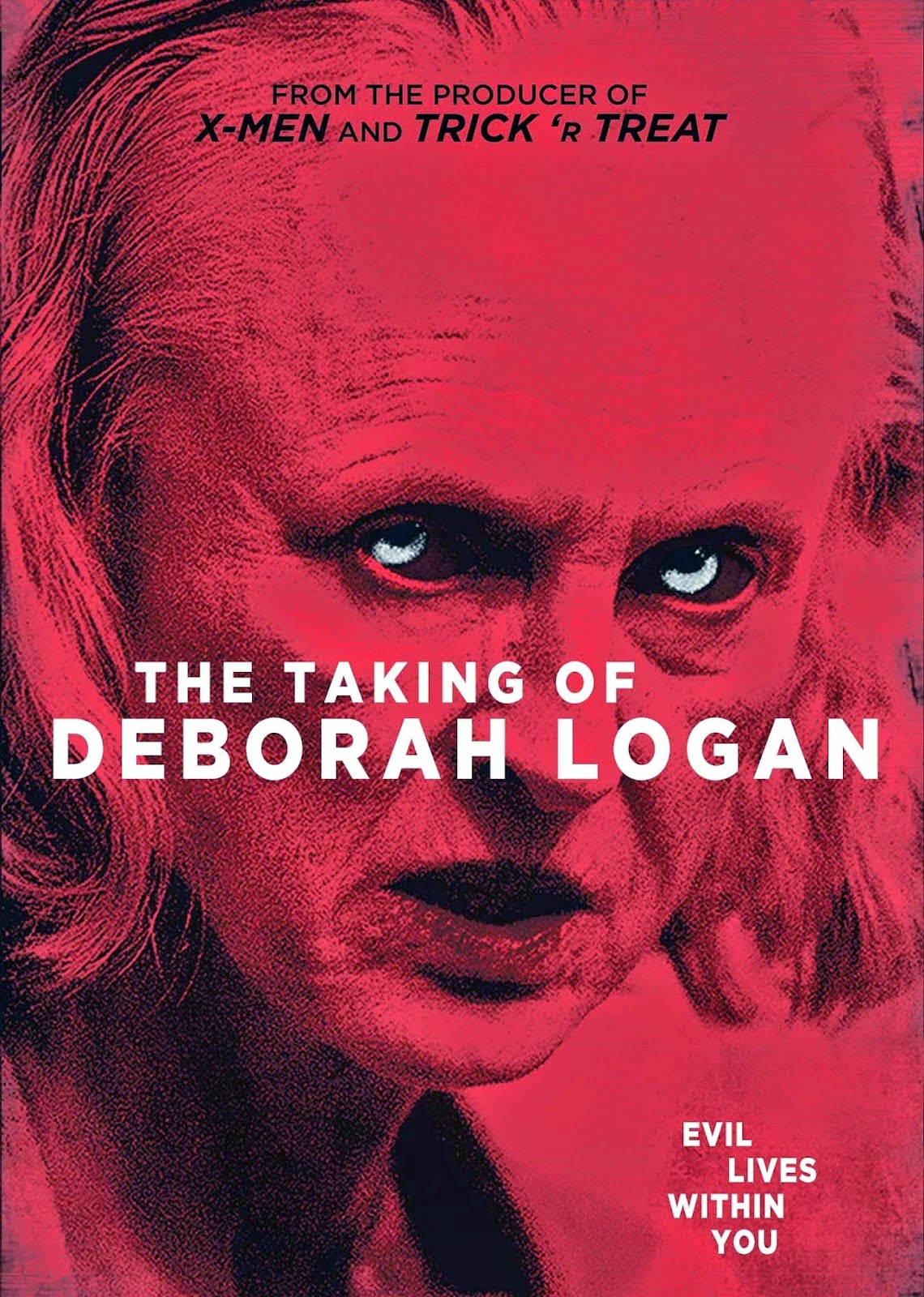
I’d never heard of The Taking of Deborah Logan before I tapped the thumbnail of the image above on Netflix. It had higher than average ratings for a horror movie, and I liked the general premise so I decided to give it a shot.

Deborah Logan is a found footage film (wait, come back…really) put together–in its first third especially–to come across as a legitimate documentary. A college student and her two person crew have gotten the titular Deborah to agree to be the subject of a film the students are making about Alzheimer’s disease. The students capture Deborah’s demise from forgetful to bizarre to self-harming to harming others and begin to wonder if something more sinister than the disease is at the root of it all.

At its core The Taking of Deborah Logan is fairly standard horror movie fare not far removed from the king of all found footage films, The Blair Witch Project, but it stands out for a few reasons, chief among them is the acting–the two main characters, Deborah and her daughter Sara,  are especially believable right off the bat, so as the trajectory of the film veers from realistic and creepy to out and out batshit crazy you find yourself too invested in the characters and story to turn back.

Add to that the clever angle of Alzheimer’s blurring the line between naturally occurring mental issues and more devious forces at work, and the movie manages to suck you in. This is found footage at its best, in my opinion. If you didn’t know going in it was a work of fiction, it would take a good 20-30 minutes to figure it out.

The majority of the jump scares are relatively well placed, but what I really appreciate is that the director resists the temptation to lace them all throughout the movie. There are a good number of scenes where you begin to anticipate a jump scare that never happens. That’s one of my favorite things, that building of tension without a payoff. Then once it finally does pay off, it does so in a major way.

Finally, there is one shot from across the room of Deborah mindlessly playing a tune on the piano with one hand while staring vacantly into the camera that is without a doubt one of the creepiest 15 seconds of film I’ve seen in a long time.

I was going to include a link to the trailer, but I think the trailer gives too much away. Look it up if you want, but I’d recommend just watching it knowing as little as possible.

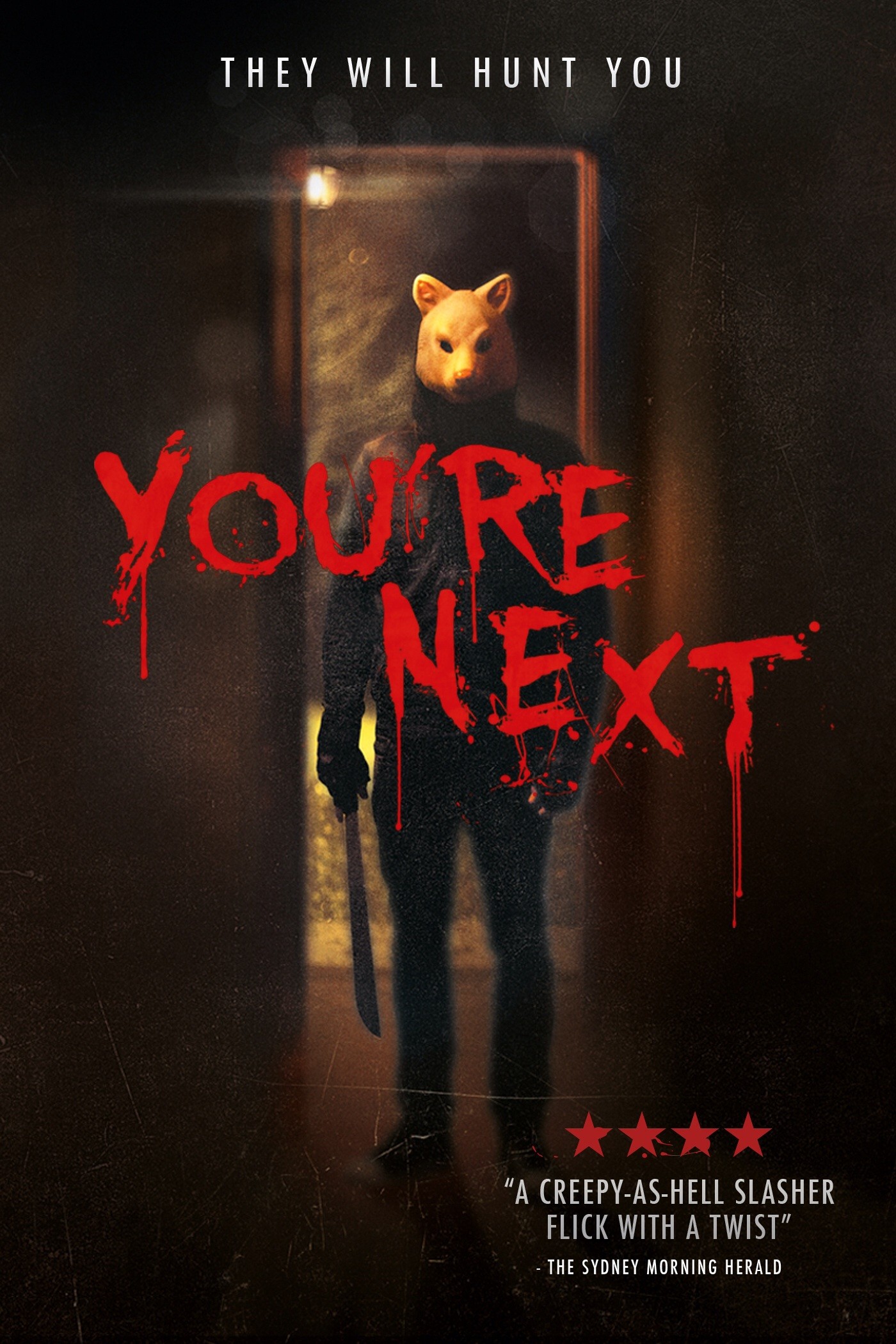
While I’m at it I’ll throw in a couple other good scary movies I’ve seen in the past couple months. You’re Next is an insanely fun, twisted movie about a group of people trapped in a house surrounded by bloodthirsty killers, and Creep is an unsettling film about a filmmaker hired to document a few days in the life of a terminally ill man expecting his first child. While it doesn’t pull off the found footage angle quite as well as The Taking of Deborah Logan it’s still quite believable, thanks in part to the strong performance by Mark Duplass as a truly twisted man.

you-re-nextUnknown

If you’re looking for something off the beaten path of typical horror, give one of these three a shot and I bet you’re not disappointed. And if I don’t get my lazy ass to the computer to post anything else before the end of the month, Happy Halloween!

Loneliness vs Being Alone

Last night I did something I’d always wanted to do, but had never gotten the chance: I went out to the middle of nowhere (sort of) and watched the Perseid meteor shower. 

  I say sort of because the spot I went wasn’t exactly top secret and quite a few people turned out to see the show.  Still, it was far enough from the city lights to make for a good viewing experience. 

The difference between me and probably everyone else there? I was alone, and I couldn’t have been happier. 

I’m an only child, so I’ve always been fairly content in my own company. I think that’s part of what makes me suited to writing–spending chunks of time in self-imposed solitary confinement doesn’t usually tend to bother me.  Sometimes I actually find it comforting, as I did last night: laying on the hood of my truck, staring up at the stars and watching meteors punctuate the sky like something out of a dream. 

Still, there are times when loneliness creeps in. 

I should explain. A couple of months ago I began living alone for the first time in my life, and even though I said that about being okay with being alone, it’s taking some adjustment to get used to. Since I work so much overtime at my day job I really don’t have a lot of free time, and I generally do pretty good at making the most of it when I do, but sometimes, now that I’m alone anytime I’m not at work…yeah, I get a little lonely, mostly on my days off. 

When I do get bitten by that little bug called loneliness, I try to find something to do that will occupy my time, however mundane it may be. 

(Side note: any fellow writers out there know good and well that any free time should be spent writing and editing, and while I won’t contest that I will say that my writing conditions are far from optimal right now, and it’s made it far more difficult than it used to be for me to get work done. For what it’s worth, I do have a new short story I’m working on, so I’m not at absolute zero on the productivity scale, just pretty low.)

Last night I found myself getting restless and bored and yes, a little lonely, while I killed time until it was late enough to go out and watch the meteor shower. During those intervening hours I wrote an email, played the guitar for the first time in ages, even found myself scouring a rusted cast iron pan in dire need of some TLC. 

It worked, as eventually the time came for me to drive out to the small local observatory where people went to watch the shower. The observatory had special late hours, so I went in and had a look around and took a gander through their giant telescope (a bit disappointing…shhhh, don’t tell them–I don’t want their feelings to be hurt), and took in the variety of people who had turned out for the show. 

  • The bros there with their stereo, a cooler of beer, and some girls, who got more than a little intoxicated by the time they left.
  • The young couple who perhaps thought, as did I, that the spot may be more desolate, providing them a good make-out spot. 
  • The family who parked behind me, with their boy of about 10 who was clearly fascinated with astronomy, and in his excitement had apparently lost the ability to control the volume of his voice. Everyone within a 100 foot radius knew that he knew where the Milky Way was, not to mention a few constellations, and, in one bizarre tangent, the history of the twin towers and the events of 9/11. 

Slowly, one by one they left, until I was practically alone with the insects and the few remaining die hards who I assume were staying out until dawn. That’s when it got peaceful, almost zen-like. It was quite nice. 

Last week I spent a day off doing whatever I wanted, for the most part–a day just for me. I drove around the city (which is not just something I find enjoyable but also helps me with my job as I continually get more familiar with the city’s geography), went to a used bookstore and picked up a couple books, and treated myself to a movie (The Gift if you’re interested, which put an excellent spin on the “crazy stalker” type thriller–highly recommend). Just me and my box of Hot Tamales, and I had a great time, and a great day. Not once did I feel like I needed anyone else to enjoy it more. 

So while I still have the occasional bout of loneliness (like the one I’m currently battling by writing this post), I’m getting good at spending quality time with the guy in the mirror. And that’s good, because he seems like an alright guy–I think I like him. 

The Unbridled Joy of Flipping Off Friends

My workplace is…lenient, shall we say, in regard to language and conduct. Not to say we’re not professional–neigh, we do our jobs and do them well. Dare I say we’re a group of ass kickers who not only perform but thrive under pressure. Perhaps as a bit of a way to blow off steam, our superiors recognized the value in letting us express ourselves largely uncensored. There’s a time and place for filtering what you say and how you say it, but aside from those special occasions, all bets are largely off.

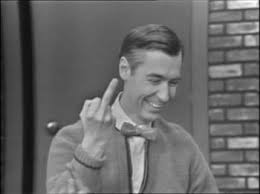
As part of this new freedom of expression that accompanies my job, a few months ago I rediscovered the granddaddy, the reigning champion of hand gestures: the middle finger. The bird. The wonderful, wordless way to tell someone what you really think of them. But unlike a verbal insult, flipping someone off can be more than an offensive suggestion you give to idiot motorists. You can use it to rib your friends in ways that work as well as insulting their mother, and in a much more subtle way (if that’s what you’re going for).

And therein lies the beauty of flipping someone off. Is is childish? Yes. Is it crude? Absolutely. But the variety of ways that crude, childish message can be delivered is staggering. Don’t believe me? Somebody actually wrote a book about it.

http://www.amazon.com/Ways-Flip-Bird-Jason-Joseph/dp/0767926811
Luckily, the people I choose to flip off have a similarly warped sense of humor and take no offense when I call their name under the guise of needing to ask them a question and have a bird perched and ready for them when they turn around. Occasionally I’ll see a co-worker walking my direction and prepare for a quick-draw bird for them so when their eyes glance in the general direction they’ll see it. And sometimes, if the coast is clear, there’s the long distance, office-long bird, flying from one wall to the other before reaching its intended recipient.

Some of my friends are now starting to send the bird flying right back in kind, or, ever more frequently, beating me to the punch. It fills my heart with joy to see an otherwise innocent-looking person hard at work at their desk while simultaneously telling me (wordlessly) to go fuck myself with the slightest of grins from the corner of their mouths.

See, we all understand, in our own brand of lunacy, it’s actually a show of affection—a salute, of sorts, for the truly twisted.

Tomorrow’s Friday, what better day to start a bird watching club of your own? Give it a shot–call out to a friend and let them know how much you care. 

As for my own friends/co-workers, they already know exactly where I stand:

images-1

A Strange Milestone

I had a realization the other day that made me stop and think: it dawned on me that I’m the same age now that my mom was when she passed away. It’s not anything I was keeping track of—I wasn’t marking off the days on a calendar or anything. I’m not even sure how I realized it or what made me think of it—it just kind of dawned on me one day. Needless to say, it was kind of a strange little punch to the gut feeling: seeing where I’m at now, and where she was then. It also led me invariably to more thoughts of my own aging—how things are going and what direction things may take.

In 1991 my mom was 41 and she had me (duh)—a goofy-but-fairly bright 17 year-old high school senior who was trying (successfully) to keep my grades up and (unsuccessfully) to get dates, and looking toward graduation and beyond. Little did I know that before the school year was up I’d be down a parent and life would get turned on its head. Now I look at myself at that same age she was then and it’s crazy to think about.

I know of one other person who lost a parent not long after I did, and while we’re still Facebook friends I haven’t actually had any correspondence with him in years. I wonder if he’s reached that magic number yet, and if it was as weird for him as it was for me. I also have some cousins who lost their mom, too (my aunt), and the oldest is getting close to that age as well, if he hasn’t already hit it. So strange to think about.

On a semi-related topic, I inadvertently wound up as the old guy at work, which has been interesting. I’m far from the oldest person there (other shifts have people that are older), but am in fact the oldest person on my shift, which is weird. I work with really young people—some of which are literally half my age—and it has advantages and disadvantages. On the plus side, I feel at least slightly in tune with younger people, which I’m thankful for because I have story ideas (one in particular, for a book involving a young female protagonist) for young characters, and I don’t want to write a book about a twenty-something year old main character who uses slang expressions from the 90s or sounds like a 41 year-old dude.

On the downside, when the generation gap does rear its ugly head, it can sometimes hit hard. Someone at work asked me about a picture of my old band that was posted on Facebook, and when I told them it was from 1993 or ’94, they replied with, “I was busy being born.” Ouch. Not that I blame them—it comes with the territory. Hell, when I was in my early twenties we used to tease the 26 year-old that hung out with us, telling him how he was going to die sooner than the rest of us, stuff like that. But now, being on the other end of it, it’s surreal.

I really haven’t had much to write about lately and this is the only thing that’s been on my mind and seemed blog-worthy. In all honesty, I’m probably going to dial back to a once or twice a month posting schedule, assuming I don’t retire the blog entirely. Between the job (which I love, but now that I’m full-fledged, so to speak, requires a fair amount of overtime) and the time I need to devote to actual writing and editing (I’ve got novels to finish, people!), spending time on the blog seems like a luxury more than anything. I don’t want to stop it altogether, and I don’t think I could even if I wanted to, because it’s a good feeling knowing at least a few people out there are reading something I write (and the way rejection letters are stacking up it may be awhile before you see any fiction from me again), and writers are needy folk—my ego needs it. So I’ll keep posting as the notion strikes me, hopefully no less than twice a month. Which reminds me: I implore you, if you haven’t already, friend me on Facebook or follow the blog by email. As I post less frequently it will be easier to miss my new posts in the sea of blogs on WordPress.

So, until next time, whenever that is, take care.

Wonderbook: Worth its Weight in Gold

We all had the “cool” teacher in school—do you remember yours? Mine was Coach Mahr (I think that’s how he spelled it). He taught anatomy and physiology, and was also the track/cross country coach at our high school. He was younger than a lot of the other teachers (probably mid-thirties), and could often be seen out on the track, running alongside his team. In the classroom, he was funny and engaging, and his class was a lot of fun. In contrast, my 12th grade English teacher was Mrs. Simons, was an uptight Irish woman who ran a tight ship and made her class dreadfully boring to attend.

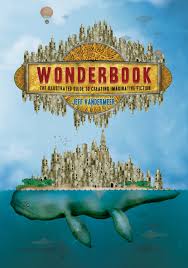
In books about writing, we have Strunk and White on one end of the spectrum (indispensable as it is, The Elements of Style is a bore—stuffy, and a chore to actually try and read), and on the other end, the “cool” one, is Jeff VanderMeer and his awesome writing tutorial Wonderbook: The Illustrated Guide to Creating Imaginative Fiction.

Unknown

Have you ever had the experience of intrinsically knowing something, and the first time you hear or see that something explained a flash bulb goes off in your brain? That’s kind of what reading Wonderbook has been like for me.

See, one of the most common pieces of advice for writers is, ‘you have to read a lot.’ And that’s good advice, because it’s really the only way to see what you do and don’t like, what you think works and what doesn’t, etc. But in the end you pick a lot of those things up almost subconsciously, to the point that you may know what to do but you may not be sure just why (or sometimes, how). Then along comes the amazing, all-knowing wizard Jeff VanderMeer to break it all down for you.

This book explains things I’ve never seen anyone even attempt to explain before (and believe me, I’ve done my share of research and studying). Most writing books lean more to the Strunk and White side of things—a focus on grammar rather than constructing a story. VanderMeer talks about all aspects of creating: from story structure and pacing to character development, and even the act of creating itself, and recognizing and nurturing your own imagination to be your most productive. What’s more, there are a multitude of essays from renowned authors such as Neil Gaiman and George R.R. Martin, to name but a few.

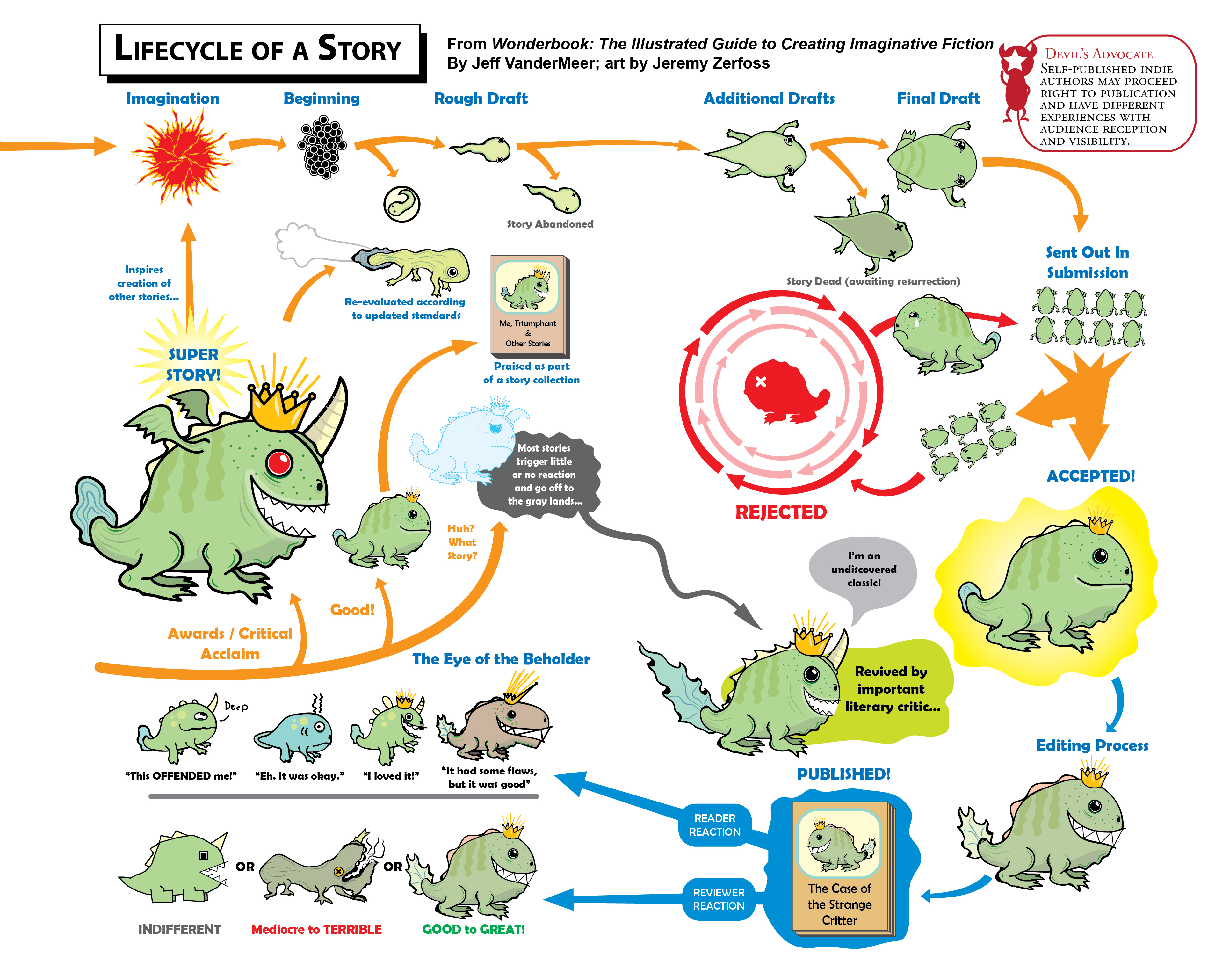
Wonderbook is also chock full of illustrations, some to help drive certain points home, but also just to keep your brain engaged and make the book entertaining. I’m sure I’m probably violating some kind of copyright laws by putting this on my blog, but somehow I think Mr. VanderMeer would be okay with it. It’s one of my favorites:

life-cycle-of-a-story

The book is chock full of similar illustrations, getting even more bizarre and surreal. The book is so densely packed with useful information that within the first few pages I was asking where this marvelous thing had been all my life. It’s also worth noting that I haven’t even finished the book yet. I was going to wait until I was done to write up this piece, but I soon realized I’ll never really “finish” it, because aside from the text, there are also writing exercises and supplemental online content to further the Wonderbook experience. Not to mention the fact that Wonderbook will also serve as a sort of reference manual for me for years to come.

Add to all this the fact that Jeff VanderMeer isn’t just some guy telling other people how to do what he hasn’t had success doing. If you’re not familiar with the name, you may recognize his acclaimed Southern Reach Trilogy—Annihilation, Authority, and Acceptance—which came out to rave reviews last year and are now on track to become a series of movies as well. It gives the advice in Wonderbook a little more weight, somehow.

If you’re a writer or know someone who is (or is thinking about becoming one), they need this book, even if they don’t know it. It’s slightly geared toward fantasy and sci-fi writers, but they’re hardly the only people who will benefit from reading it. I can’t think of a single more useful tool to writers at all levels of competency, and in all genres.

Check it out at amazon here.

A Night of Subverted Expectations

This is a sort of pop culture wrap-up for my Saturday (and again, my Saturday=your Sunday). I finished the book I was reading and my wife and I squeezed in three—count ’em, three—movies, and it turned out to be a mini James Gandolfini marathon. Aside from the movie Thirteen, starring Holly Hunter and a teenage Evan Rachel Wood (which was a good fly-on-the-wall look at a good girl’s turn toward the dark side, and is BOJ certified as recommended, but didn’t knock my socks off), the book and both Gandolfini movies subverted my expectations, for better or for worse. I’ll start with the ‘for worse.’

Unknown-2

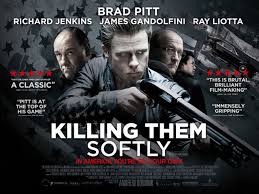
Killing Them Softly had been on our DVR for quite awhile—if you couldn’t tell by now, I’m a sucker for gritty crime drama, noir, hitmen, etc. When you have a cast as strong as this one—Brad Pitt, James Gandolfini, Richard Jenkins, and Ray Liotta—I’m in.

It wasn’t a bad movie by any means, it just seemed to miss the mark a little bit. The plot is as follows: three men are responsible for knocking off an illegal gambling ring, knowing the head of said gambling ring (Liotta) will take the fall. Pitt’s character is brought in by an attorney to the mafia (Jenkins) to figure out what happened, who’s to blame, and who’s going to die. Gandolfini’s character is brought in to help carry out one of the hits.

What seemed like it should’ve been a pretty straightforward plot was unnecessarily messy and hard to follow, ending rather abruptly and leaving my wife and I with questions like, “What happened to ____?” and “Who the hell was _____, anyway?”

It was also a bit heavy-handed with political tie-ins—the movie takes place during the McCain-Obama campaign run, and ends on election night. At the very end it becomes more clear why the tie-ins are there, but it still could’ve been handled with a little more subtlety.

It felt at times like a Tarantino/Scorcese-light kind of movie: aiming high but falling short. If you’re into these kinds of movies like I am I would still give it a go. It’s well-shot (with some stomach-turning graphic violence handled nicely, in my opinion), and well-acted. James Gandolfini is awesome (if ultimately irrelevant to the plot) as the unhinged, unstable hit man brought in to help Pitt’s character. If you don’t typically like these kinds of movies, you probably won’t care much for it.

Unknown-4

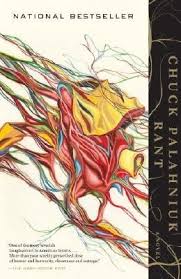
Chuck Palahniuk seems to be what I’d call an “avocado” author: people tend to either love him or hate him. I can’t fully fall on the love side, but I like a lot of his work. I’d heard Rant was really good without really knowing much about the plot at all, so when I got the chance to check out the e-book from my library, I took it.

**(side note: did you all know you could recommend e-books to your local library for them to purchase using the Overdrive app? I don’t know about other cities, but the lovely folks at the Wichita Public Library have bought two books on my recommendation, and I think that’s downright awesome)

It starts as a character study of Buster “Rant” Casey, a backwoods country bumpkin who as a kid has an affinity for getting bitten by insects and vermin, picking his nose and sticking the boogers on his wall, and finding valuable coins.

We follow Rant to an early diploma from high school, where he moves to the city and the story takes a turn into sci-fi territory, as we learn society has been divided between the respected “Daytimers” and the lowly “Nighttimers”, with a strict curfew to keep the two groups from intermingling. Rant falls in with the Nighttimers and into a social circle known as Party Crashers—an organized sort of after-hours demolition derby that takes place on the city streets. To give much more away would ruin the book.

About 2/3 of the way through the book I was interested in the story, but starting to get a little bored. After reading the last third in one long stretch, I felt dizzy. The book goes from taking a turn here or there to spinning like a top until you don’t know up from down, left from right, or father from son.

The “hook” of Rant is in the way the story is told. The official title is Rant: An Oral History of Buster Casey, the key words being ‘an oral history.’ The book constantly changes perspective as different characters give their accounts of the events that unfolded in Rant’s life, sometimes outright contradicting each other. Kind of like a documentary or a special on TV, the way they jump from one talking head to the next. It’s used to great effect, but also made me wonder—

Where’s the line between originality and gimmickry? One of the complaints I hear about Palahniuk is that he’s a gimmick writer, with nearly every novel using some kind of cheesy narrative device to tell the story. There’s no denying he uses different techniques to tell his stories, and I can see the ‘gimmick label’ being applied. The thing is, is it only a gimmick if it doesn’t work?

Pygmy, Palahniuk’s widely hated 2009 novel told via the journal entries of a 13 year-old foreign exchange student/terrorist in badly broken English, is downright tough to read (I think I liked it more than most), and dismissed as a gimmick. Rant, on the other hand, is held in much higher regard, and the ‘oral history’ gimmick isn’t mentioned as much. I don’t necessarily think every book by an author has to have some kind of gimmick to tell its story (I sure hope not, because my storytelling thus far is pretty straight ahead), but wouldn’t the literary world be a boring place if there weren’t people like Palahniuk taking chances with their stories?

Unknown-3

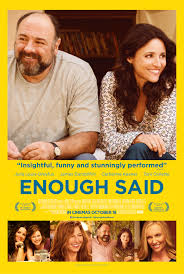
The last subverted expectation was also the most pleasant surprise. I suppose it would come as no shock that I’m not the world’s biggest fan of “chick flicks,” but I try not to discount them altogether, because I know there are some good ones out there. I’ve confessed before my liking for my wife’s favorite chick flick, Return to Me, and last night found one I liked just as well, if not better, with Enough Said.

The film takes what on paper sounds like a fairly standard chick flick or rom com plot—masseuse meets a man and woman separately, begins dating the man and takes on the woman as a client/friend, only to find out they’re ex-husband and wife—and handles it fairly realistically, playing it straight for the most part, but with plenty of chuckles thrown in (and one moment involving a baseball in a drawer that had me laughing so hard I nearly fell out of my chair, thanks to Julia Louis-Dreyfus’s impeccable comedic timing and delivery).

All the characters in the movie felt like real people, not one dimensional and flat or caricatures like in a lot of movies (and books, for that matter), and the dialogue felt realistic and smart. There was also a subplot I liked with Dreyfus’s character subconsciously replacing her daughter, who was preparing to move off to college, with her daughter’s friend. None of the characters were perfect, none of them were total a-holes (although I must admit I didn’t care for Catherine Keener’s ex-wife famous poet character—I’m beginning to wonder if I just don’t like Catherine Keener), they were just fairly normal people with flaws like anybody else. It was well-written and wonderfully acted, and I was glad I watched it. I had expected to look up from Rant every so often to make sure I was following along with the movie, but found myself with my book (phone) in my lap, all my attention devoted to the movie.

 All in all a great night with my favorite person, and a good way to recharge the batteries for writing and some very likely overtime in the coming week.

Resting Dick Face: What It Is and How You Can Help

“What’s wrong?”

“You look like you don’t want to be here today.”

“Somebody got up on the wrong side of the bed this morning.”

We’ve all heard these phrases. Maybe you’ve even used a few of them yourself. But did you know these sayings could be indicators of a crippling affliction affecting a large number of Americans today?

Hi, I’m writer and blogger Kenneth Jobe. You may know me from blog posts such as Minor Annoyances A-Z, the Freshly Pressed The Forgotten Art of Simple Conversation, and the horror anthology Robbed of Sleep, Volume 2, now available in paperback and e-book format. I’m here today to talk to you about a largely unspoken disease wreaking havoc on the unfortunate souls who suffer from it. These poor men are victims of unabashed stereotyping, some even being shunned from social circles due to their devastating illness.

What could cause such emotional turmoil for so many men?

images

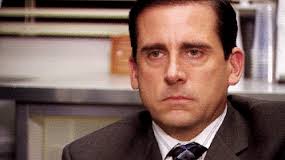
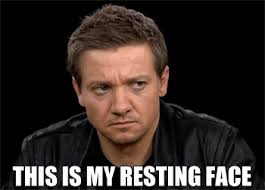
Resting Dick Face is a very real, totally not made up condition affecting millions of men annually. Also known as Resting Douche Face, Resting Bitch Face for Men, and God, That Guy Looks Like a Real Dick, RDF can have a multitude of negative side effects.

I know what you’re thinking—But Ken, how do I know if I or someone I love suffers from RDF?

First of all, don’t call me Ken like we’re friends. Second, that’s a very good question with no easy answer. To help you determine if a loved one might have RDF, I’ve come up with a series of questions that help make it easier to identify and diagnose:

Does the man you suspect of having RDF have more than one facial expression?

Is one of those expressions a smile or laughter?

Is the man in question generally a nice guy despite the look on his face?

If you answered yes to 2 out of those 3 questions, you may in fact know someone battling RDF.

Okay, I know someone with RDF—how do I act around them?

This can be tricky. Treating someone who’s different like they’re normal is never easy. Take it from me, I should know—I’m a white male. To help you, I’ve included this simple guide to Living with Someone Living with RDF.

Do you like the person who has RDF and typically enjoy their company?

Yes: Treat them as if they don’t look like someone has urinated in their cereal bowl. Maybe even greet them with a smile or friendly gesture to help ward off their current case of RDF.

No: Avoid eye contact and all social interaction.

I know what some of you out there may be asking yourselves: I think I smile and look pleasant most of the time, but people still seem to avoid me, even after striking up a conversation. Some people even roll their eyes when they see me or walk away from me when I approach. I don’t know what their problem could be, I just tell it like it is. Is my RDF more serious?

It’s unfortunate you have to find out this way, and I wish there was another way to break it to you, but it’s time for you to face facts—you’re just a dick. BooksOfJobe Publications is currently hard at work on a Guide to Ending Dickish Behavior, but in the meantime, the best advice is to try to get your life together and stop being such a massive dick.

How do you know so much about RDF?

This may come as a surprise to many of you, since you don’t actually see my face up close and personal and my blog makes it clear that I’m an all around awesome individual,  but people close to me already know the shocking truth: I suffer from RDF.

I’m lucky—my case is strictly mild-to-moderate RDF, but it can still strike without warning, and still be quite devastating. As a matter of fact, this Public Service Announcement was brought about when I was self-diagnosed with RDF less than a week ago, after arriving at work in a pleasant mood and being greeted with a bevy of comments ranging from, “He looks thrilled to be here today,” met with “Yeah, I can tell,” to “You look like you’re so over today.”

Unknown-3

It was then that I began my journey of self-discovery and realized how many poor souls out there need our help. If you know someone with RDF, don’t let them suffer alone. Engage them in conversation, pay them a compliment, or make them laugh, and help them ward off their current case of RDF. If you encounter a man with RDF in the wild, don’t be afraid. Approach him with the same caution you would exercise when approaching any man you don’t know. If, after a few minutes of conversation, the man’s expression hasn’t changed and they don’t warm up to you, have no fear—you’ve just encountered a dick. You may exit the conversation at your earliest convenience.

For the men who suffer from it, RDF is an uphill battle, but together we can win the war. I’ve started a charity, the Fund for Understanding and Collective Knowledge, and our top priority is eliminating RDF from the male populace. Please consider a modest donation—every dollar helps.

Click here to donate to the Fund for Understanding and Collective Knowledge

Get to the point already!

Taking a break from rewrites today for two reasons: 1) the synapses just aren’t all firing—chalk it up to exhaustion following a busy work week (I’m writing this on my Saturday, which is Sunday for you M-F’ers, even though you’ll be reading it on your Monday, which is my Sunday, got it?), and 2) I don’t want to neglect the blog, so when I got an idea for a post I decided to hurry and write it up.

I haven’t written anything new for quite a while. I’m still trying to get the same batch of 4 short stories published (the oldest of which has been bouncing around for almost a year now), considering final tweaks on novel #1 before finally calling it officially done (I recently had a light bulb moment regarding the final act and may have to rewrite some of the book’s climax), and rewriting novel #2 (#1=Snakebit and #2=Liberating Oz, for those of you keeping score at home). What this means is that I’ve been in an editing frame of mind for quite a while, and will be for at least a couple more months.

On top of that, I just finished Stephen King’s latest novel, Revival, and had a brief discussion on Facebook with my friend and fellow writer (as well as my go-to movie and music expert) Jeff, in which we agreed that Mr. King has an issue with being excessively wordy and needs to keep someone around to tell him when it’s time to cut the crap and get to the point.

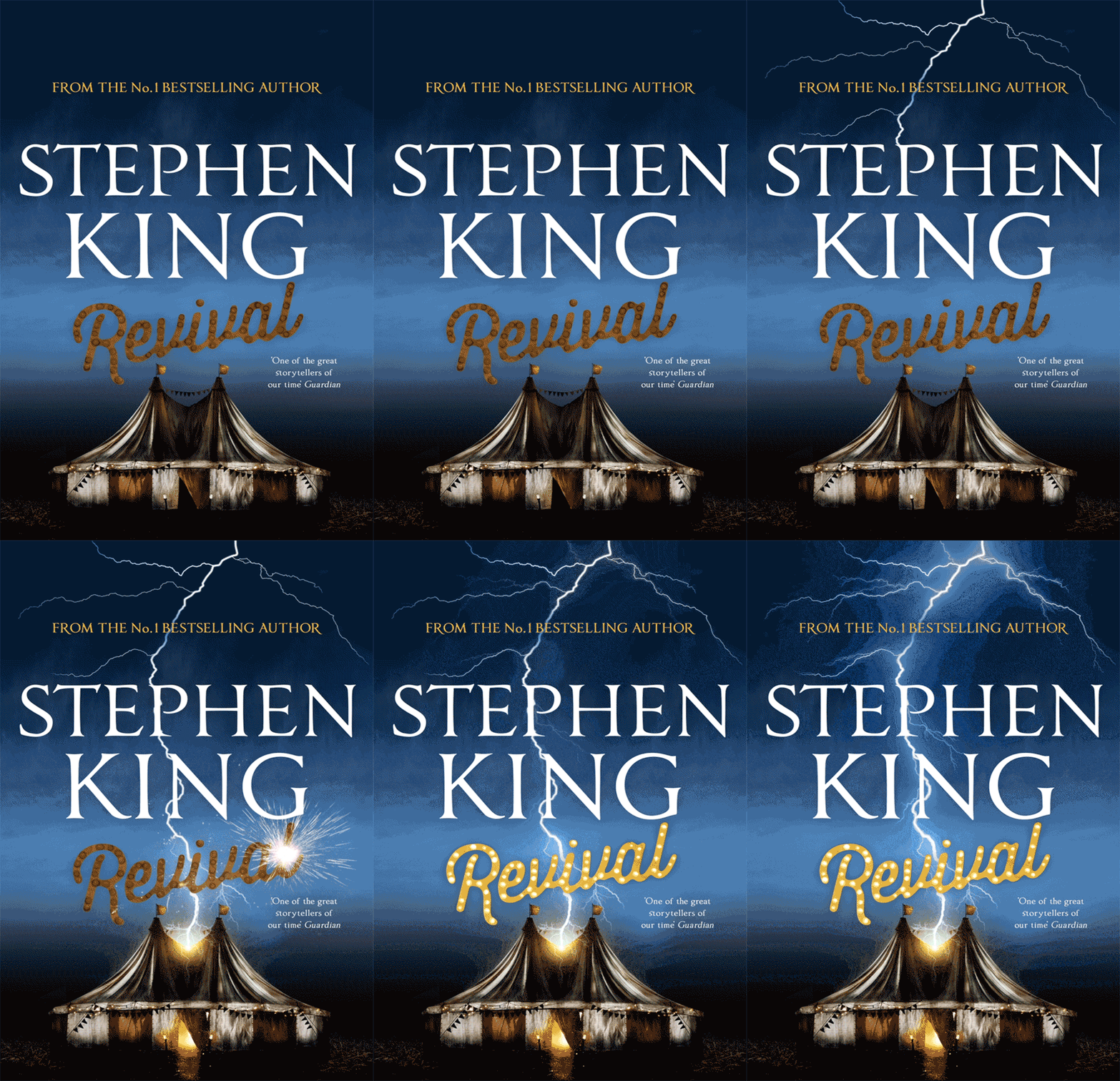
How cool is that? Also, if anyone cares, this is an alternate cover, of which there were several, all of them cooler than the official US cover, in my opinion.
How cool is this? This is an animated GIF of an alternate cover, of which there were several, all of them cooler than the official US cover, in my opinion.

I’m not going to get into the specifics of Revival, but it’s by no means a bad book. The first third or so had me riveted as I waited patiently to see how all the backstory would pay off. And the ending was quite good, if you like things dark and twisted like I do. Especially coming from King, it was a satisfying (which in this case means unsettling) ending, and yet I was still a little frustrated when I finished it. Because the rest of it—from about 1/3 of the way through until the last 30 pages or so? Ugh. It was still interesting, at least to me as a musician, but it started to drag on, and on, AND ON, until I started thinking, ‘Good God, when is something going to finally happen?’

A brief word about my job (it ties in, trust me): I’ve completed training and am now a full-fledged Fire and EMS dispatcher, so when calls come in for medical and/or fire-related emergencies, I’m one of the people going out on the radio and telling the units where to go and what’s going on there. It can be stressful (and is, fairly regularly), but it’s actually also a boatload of fun, if you can believe that. But the thing is, among all that chaos I still have to take 911 calls as well and juggle all of it simultaneously. What this has meant is that when I’m on the phone with a caller I have a newfound sense of urgency—I need to get the pertinent information and get off the phone as quick as I can so I’m available on the radio if units need to tell me or ask me something. I feel like a lot of writers could benefit from having a similar sense of urgency in telling their stories.

Elmore Leonard had the advice that aspiring writers have probably read a thousand times, “Try and leave out the parts that readers skip.” I wish more writers would take that advice. Now, I’m not opposed to taking some time to give some backstory, or maybe a lot of attention to detail in certain scenes if it’s called for, but for the most part I like stories that cut to the chase and keep the ball rolling, like that big boulder at the beginning of Raiders of the Lost Ark.

images

Liberating Oz is written in the first person, and it’s the first extended piece (meaning longer than a short story) I’ve written from that POV. The fist third-to-half of the book is setting up events that unfold in the second half, and for some reason it feels at times like I’m rambling and not staying on task when telling the story. Deep down, I don’t really think I am (I won’t know for sure until I sit down with my reading cap on versus my writing/editing cap), after all the thing’s barely novel-length as it is, but still, I wonder. In my conversation with Jeff about Revival, I said to him, “It would’ve made a killer novella.” I don’t want the same thing said about my own work. I’d rather write a killer novella than a too-long novel that bores people.

Writers out there: do you ever have any issues with feeling like you’re taking too long to get to where you’re going, be it first or third person? How do you keep yourself on the straight and narrow?

Readers out there: what books can you think of that lost you along the way because they just took too long to get to the point? Or, conversely, what books got right to it like a gunshot and had you riveted from start to finish?

Until next time, I’m off to do a little reading, once I decide which of the remaining books I got for Christmas is next. What a nice problem to have.