Writing Through Distractions

To clarify, I’m not offering advice here, I’m asking for it.

I remain about 65k words into my latest WIP, where I’ve been stuck since just before Thanksgiving. Why? Because I got distracted and I’m having trouble getting the ball rolling again. But wait, what’s that, there on the horizon? It’s an even bigger distraction!

To elaborate slightly, I got out of my routine because of a couple deaths in the family, then the holidays, then…well, general laziness after getting bumped out of my routine. And now, my family is contemplating a move out of state this summer. I say contemplate, but it’s practically a foregone conclusion. Now I don’t know about you, but I haven’t had a big move (as in out of my current city or state) in a very long time. There’s a lot to consider! But I need to put all of that out of my mind so I can get back to my WIP.

Can you say easier said than done?

If I try to focus on any piece of writing, the second I stall—even momentarily—my brain jumps back to things related to the move. I have to relearn how to prioritize, compartmentalize, and strategize so I can get my shit together and get my writing done. I *really* want to have this current WIP done before I move. I like the idea of starting a new project in a new place, not having the loose ends from the previous one that need tied up before I can move on.

On that note, one silver lining through all this is that even though I haven’t been actually writing much, I’m still constantly thinking about writing, and all that thinking has bore some fruit, so to speak. I have a short story I’m about to submit for an anthology I hope to get into (the odds are stacked against me, to say the least), and as is sometimes the case the general premise behind the short story blossomed into a larger idea that can easily be fleshed out into a novella or maybe even a full fledged novel. I don’t want to spill all the beans other than to say it’s a pretty pitch black comedy, and when I described the premise to a mentor/colleague, he coined the term “encouraged suicide”, which is pretty accurate. More on that to come.

So help me out here, WordPressians…Wordpresstons? How do you focus when it feels like you’re being pulled from all sides?

You know what the worst part is? I feel like I already know the answer: the answer is probably “you just write.” And with a little more effort, a little more concentration, and a lot more caffeine, I hope I can do just that. Just fucking write.

Which is what you should probably be doing too! Good luck!

Are Any of You in IRL Writer’s Groups?

Something has come over me recently. I don’t know why now, of all times, but it has. I’ve been thinking about writer’s groups. Writing is a highly solitary endeavor most of the time, as you all know. I guess I’m yearning for some camaraderie, and having people willing and able to ready work and offer helpful feedback.

I’ve been interested in writing groups going back several years, when I started reading Chuck Palahniuk’s essays on writing. He mentioned several times how much being in a writer’s group helped him hone his skills. He also described a certain freedom among those in the group, knowing they were all like minded and could write about anything under the sun, no matter how disturbing, violent, or unsettling the content may be.

That’s where I foresee problems with the existing writer’s groups in my area. Now I’ll admit full well that I could be wrong, but looking at the existing writer’s group in my town I see a lot of self published authors who are fairly old and write things like religious stories and historical fiction set here in my home state. To quote a former coworker, I think the kinds of stories I write would go over with that group like a fart in church.

So, I’ve been thinking of starting my own—if there’s sufficient interest, that is. I’d like to have plenty of genre writers, and while newbies are always welcome, I’d love to have some more experienced writers (or even novice writers who are voracious readers) who could offer meaningful critiques. That’s something I found lacking with online writer’s groups.

I joined a few groups online back in the day, by which I mean ten or so years ago, and they weren’t a very pleasant experience. Nearly all the feedback received was either thinly veiled insults that I suppose made the person offering them feel better about themselves, or somewhat helpful feedback from people who seemed perpetually exasperated, as if they just could not be bothered to read and critique someone’s work (which made me wonder why they were in the group to begin with).

Even a critique free group would be nice. A writer’s support group, if you will. Going back to my last post about following/friending fellow writers on social media, it’s just reassuring that they’re out there. But now I want that in real life.

So I’m curious if any of you have been in IRL writer’s groups and what your experience was like. I’ve heard comments from both sides, so it seems like it could go either way. It almost seems like getting into a good writer’s group is like catching lightning in a bottle: it could very well be a train wreck, but if you catch the lightning, something magical happens.

Where Do You Find Inspiration?

Inspiration for writers can sometimes be hard to come by. We’re all out there, grinding as best we can, but sometimes that doesn’t cut it. Sometimes it feels like being a writer is nothing but a huge exercise in futility. You write, you submit, you get rejected, rinse, repeat. After a while you can start to question your sanity and maybe even ask yourself, “Why am I even doing this?” That’s why writers success stories are so important to me.

I have a friend who was giving me a hard time a while back (good-naturedly, but still) about the large number of Facebook friends I have that I’ve never met. And it’s true—I’m friends with probably well over 100 people that I don’t know in real life. In many cases, I’ve never even interacted with them aside from liking some of their posts and the rare comment on a post or a reply to a tweet here and there. On the one hand, I saw what my friend was trying to say, but at the same time it really annoyed me because he’s a writer too, and yet it was clear he just didn’t get it. I’ll friend almost any writer out there who writes anything remotely interesting to me (as well as other creative types, like painters and photographers). I do it for two reasons: it reassures me that I’m not totally alone in this crazy-making endeavor when I see others with similar challenges and struggles, and when one of them “makes it” so to speak, it can really be uplifting.

Several years ago (I’m guessing around 2012-ish?) I stumbled upon a little website out there in the blogosphere called Terrible Minds—The blog of Chuck Wendig. At the time, Wendig was still very much grinding away, writing fiction when he wasn’t working his day job. I enjoyed his blog and found many of the things he wrote about quite relatable. Then, one day he announced he was quitting his day job to write fiction full time. A bold move to be sure, but he took a chance on himself and it paid off—not long after he was hired to write books in the Star Wars universe, and he hasn’t looked back since. I thought that was awesome. Absolutely incredible, and I was so happy for him and also so fired up to get after it and kick my writing into high gear. One day around this time, I decided to look Mr. Wendig up on Facebook, and lo and behold, there was the button: Add Friend. So I clicked the button and he accepted. That was a real ‘a-ha’ moment for me. I proceeded to look at all the people Facebook was suggesting I might know, and if they were a writer, I added them. Turns out, writers seem to like being friends with other writers.

Another that sticks out is Paul Tremblay (Head Full of Ghosts, Cabin at the End of the World). He was a full time high school English teacher before Ghosts took off, and he got a nice tweet recommending his book from the one and only Stephen King. I was so happy for him! It made me feel like even though the odds are certainly stacked against us, people do make it out of the slush pile sometimes.

More recently, I’ve watched Gabino Iglesias (quite possibly the hardest working man in the writing business) garner critical acclaim for his books and go on to get a gig with The New York Times (along with his other gigs with NPR and the Boston Globe) reviewing horror novels, and there’s no doubt his sales will only go up with each new book.

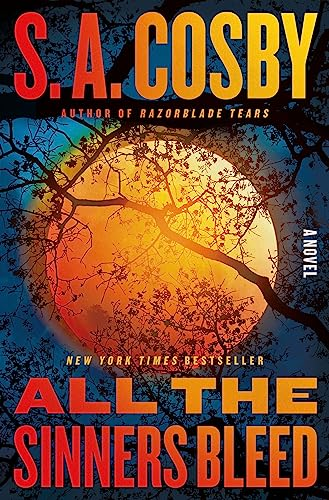
And most recently (and the reason for this post), S.A. Cosby. I followed Mr. Cosby on Twitter before I ever read any of his work and was instantly a fan. I’m assuming most of you have heard of him, but if you haven’t, here’s a quick recap: in the past five years or so, Cosby has published four crime novels, each more lauded—and better selling—than the last. His latest, last year’s All the Sinners Bleed, was the recipient of numerous awards, as well as being placed on multiple “best of” lists. What makes S.A.’s success so inspiring is knowing where he came from to get to where he is now.

On a recent profile on CBS Saturday Morning, Cosby shed some light on his personal and professional life. Growing up in rural Virginia, Cosby lived without running water until he was 16, and was supported by a single mother who worked her butt off to put food on the table for S.A. and his brother. But here’s the nugget that really struck me: initially drawn to horror, he toiled away behind the keyboard for 20 years with limited success before he decided to change things up and give writing crime novels a try.

20 years! It sounds so…depressing. But the thing is, had he not spent those years writing horror, he may not have had the tools to write crime so effectively. That got me thinking—do I want to spend 20 years toiling away with limited success? For that matter, do you?

Then I realized something. I already have.

The first long fiction I ever wrote was a novella called Zzyzx. That’s not a word I made up or an attempt to be clever, it’s a road out in the desert when you’re driving from Southern California to Las Vegas, which was where the story was set. Anyway, I wrote that in 2000—I know that because I was working at a temporary job for the US Census Bureau at the time. Granted, my own writing has almost certainly been far more sporadic than S.A. Cosby, but still…I’ve put the time in. There’s no way I could write for this long, through so many awful short stories and wretched drafts of novellas, to finally get to a place where I feel like my writing doesn’t suck, to just up and quit now. If S.A. Cosby could do it, so can I, and so can you!

Now, I’m not trying to be Tony Robbins here or anything, but living vicariously through someone else and sharing their excitement when they find success is very uplifting to me, so I thought I’d share. I’d love to hear your thoughts on this—where do you find your inspiration?

And if you’d like to watch the segment about the hottest crime writer in the country right now, you can watch it here.

Unsolicited Advice From an Unqualified Source

Well, I don’t know if I’d call myself *completely* unqualified. Partly qualified? Sure, let’s go with that. I just thought the title was catchy and went with it. What I’d like to do is offer a little advice/encouragement to writers at nearly every stage of their journey. And what gives me, a largely unpublished writer (not completely unpublished, my ego urges me to point out), the audacity to offer advice to anyone?

Like most of my posts that offer any type of writing advice, this is mostly for me. I just figure if I’m in need of a pep talk maybe someone else out there is, too. Maybe not. Who knows? As with any writing advice, if you take it, take it with a grain of salt, your mileage may vary, all that good stuff. Okay, away we go.

For the beginner—maybe you just took up writing last year, finished a few short stories, maybe more, maybe less: Keep writing. Read a lot, write a lot. It really is just that simple, especially early on. Refer back to the Ira Glass quote (or read it here if you’re unfamiliar) or any other motivational source, and remind yourself that your early stuff will almost certainly suck eggs, AND THAT’S OKAY. It’s expected. In my experience, every time I’ve felt like I “leveled up”, so to speak, I can tell fairly easily. Maybe my dialogue isn’t as clunky, maybe my exposition doesn’t feel so stilted, etc. But if you’ve read a lot (and are continuing to read) you’ll spot it, too. Keep going!

For the intermediate—you’ve knocked out a decent number of short stories, maybe dabbled in something longer like a novelette or novella, maybe even started that first novel: Submit your work. Or, at the very least, consider letting someone read your work if you haven’t already. If you don’t think any of your stuff is up to snuff at this point and not ready to submit to magazines/websites or literary journals, try to find a critique group to get some feedback. Depending on where you live, you might have an IRL critique group in your city, where you can go meet people and talk to them in the flesh! For the rest of us, there are some resources online. Facebook and Reddit both have groups for writing critiques, and depending on the genre in which you write, you might get a lot of mileage out of Critters Workshop, which specializes in Sci-Fi, Fantasy, and Horror. Whichever route you choose, getting some feedback can be incredibly beneficial while you’re still getting your sea legs out there on the treacherous waters of the writing sea (best analogy I could come up with, sorry). 

***One note about critique groups: if you feel like the feedback you’re getting is not in any way helpful, trust your instincts and find another group. Some people seem to exist solely to tear down other writers’ work and chalk it up to “tough love” when it’s really just an excuse to be an asshole and feel superior to less experienced authors. If your guts says a certain group isn’t for you, listen to it.

For the proficient—for those of us (I say us because this is where I consider myself to be) who have written quite a few stories, maybe a novella or two, and have even conquered a novel or two (or more): It might be time to start thinking about querying/submitting to publishers or agents. How do you know which is right for you? That’s a very personal decision, and unfortunately too huge a topic to cover here. However, once you decide to go for it, GO FOR IT. You’ll get rejected, a lot, but you should be expecting that and have already developed some form of dermis scrivenereous from the critiques you’ve received. If not, you’ll build it up quick at this stage. Honestly, I think a lot of writers just hang out at this stage because it feels safe—after all, if you never submit any of your work, you can never get rejected! But is that really what you want? If it is, that’s perfectly fine. Seriously, it really is. There is absolutely nothing wrong with writing stories just for the enjoyment of yourself and a select few friends and family members. But if you’re reading this you probably want someone other than a critique partner to read your work someday, and the only way to get there is to walk the plank and submit/query. So get after it and kick some ass!

For the advanced—the ones doing it at or near the highest level, cranking out stories regularly, getting them published, and getting paid for it (though maybe not necessarily making a living at it): Keep writing. If stagnation starts to set in, consider shaking things up by trying a new genre, change length (from short story to novel or vice versa), maybe even look into running your own workshop or speaking at a writers’ conference. But unless you’re one of the rare species who can take time off from writing and then just go back to it like it’s nothing, I would implore you to keep writing. Writing is like a muscle, and all muscles need a recovery period, but too much time off and that muscle turns soft. And seriously, you don’t want your rock hard writer’s muscle turning to wordflab, do you?

And for those of you who might think I’m just some blowhard who wants to feel important by offering unsolicited advice to people on the internet….well, maybe you’re right. Hell, I don’t know. However, I’m not a hypocrite. I’ve been taking my own advice with my work—I’ve spent the last couple weeks researching and querying agents to help me find a home for my debut novel (quick note to anyone else querying, if you haven’t yet paid the dough to sign up for Query Tracker premium, I recommend it—you won’t regret it), and trying to shake things up by tweaking a short story I’m getting ready to submit to an anthology, and by writing this very blog post. I hit a stumbling block at the end of last year that killed the momentum on my work in progress, so I’m warming up that writing muscle so I can jump back in. Gotta get rid of that wordflab.

I hope somebody out there finds this helpful. If you do, please don’t hesitate to let me know in the comments. I’d also love to hear anyone else’s writing advice or encouragement, so drop that down below too. If you’re anywhere near me where it’s currently a brisk -1° F, keep warm, and as always keep writing!

Word Count Is Only Important If You Want It to Be

So it’s almost the end of Spooky Season (not really a fan of that term and yet here I am using it, good grief), and I know for a lot of you that means one thing: National Novel Writing Month (aka NaNoWriMo, aka NaNo) is almost upon us. Starting on November 1st, many of you will hunker down at your keyboards and start banging out a novel. The goal is a 50,000 word novel by the end of the month. That averages out to 1,667 words per day. If that sounds daunting to you, you’re not wrong, but there are two things I’d like to say about the NaNo word count. They may sound contradictory at first, but they’re not: 1) 1,667 words a day is not as bad as it sounds, and 2) you should absolutely not beat yourself up if you have trouble hitting it.

The thing about NaNo is there are a lot of new writers trying their hand at a novel for the first time every November. If you’ve never written anything longer than a short story or even a novella, you may not have ever cranked out more than 1000 words in a day. And that’s totally okay. Writing is basically a muscle in your brain, and like any muscle you have to train it—work it out and get it in better shape than it was when you started.

So you might sit down to write one day and hit a speed bump. Maybe you didn’t research something you need to know to keep going. Maybe you didn’t outline enough, or outline at all (shout out to the pantsers!) and wrote yourself into a corner, and have to figure a way out. Maybe your kid sprayed puke all over the living room like spin art during the time you’d carved out to write, and you only have time to write 100 words. Those are all valid reasons to not hit your daily goal. Well, except maybe the outlining thing, but that’s a topic for another day.

The point is, NaNo isn’t some winner take all event. You don’t actually lose anything if you don’t hit 50,000 words by November 30th. If you’re a new or returning writer, you may overestimate how many words you can crank out in a day. If that starts happening to you, just think of NaNo as training. Your getting that writing muscle into shape. You’re finding your way, figuring out what works for you, and if you realize 1,667 words a day isn’t in the cards for you, it’s not the end of the world. Maybe you can only write 500 words a day. Maybe you have to skip Wednesdays, but can write twice as long on Sunday mornings. Maybe you can only write when Saturn is in retrograde. Okay well that last one would be really weird, but guess what? It’s nobody’s business, as long as it works for you.

Maybe by the end of November you’ll have only written 30,000 words, but your daily word count is increasing. Maybe by the end of November you’ll have made changes to your routine that allow you to write more at the end of the month than you were at the start of NaNo. THAT is the real gift NaNoWriMo gives you. If you end the month with a 50,000 word novel, that is fantastic and amazing, and that is to be celebrated. But if you finish the month with a scattered mess of 20,000 words AND you figured out that you have to get up at 5am to find time to write, or you realize the most you can do is 800 words a day, that should be celebrated too! It’s all about finding what works for and sticking to it. Bottom line: if you come out of it having learned something about yourself that will help you as you venture ever deeper into the treacherous rough sea called writing, you won NaNoWriMo.

It just dawned on me I used over 600 words just to say ‘It’s not the destination, it’s the journey.

In what could be seen as the ultimate hypocrisy, I’m not participating in NaNo this year. Truth be told, I’ve only tried it twice, and both times it went abysmally. However, those godawful attempts helped me strengthen that writing muscle and taught me some things about myself, and I say with as much pride as a cynical, mostly unpublished (so far!) writer can have that the reason I’m not participating is because I’m 50,000 words into my new novel, so I’ll be chipping away at that all month long and rooting all of you on. And if any of you are curious, I very rarely write over 1200 words in a day, so I have the utmost respect for anyone who can manage 1,667.

So good luck in the trenches, find what works you, and above all else just keep writing.

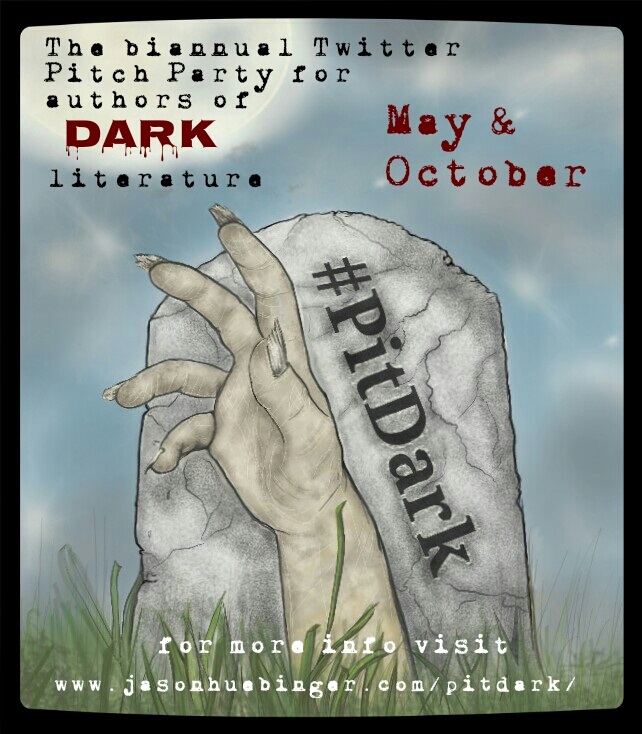
We Are One Month Away from #PitDark!

Are you one of the many writers out there with a finished manuscript, currently querying agents or publishers in an attempt to find it a home? If you are, you may already know about #PitDark, but if not you should definitely read on.

Like #PitMad, the other pitch event, #PitDark is a twice yearly querying frenzy on Twitter/X where agents and publishers look for the most interesting tweet pitches by us, the authors. The difference is that #PitDark is exclusively geared toward us freaks and weirdos who write material of a darker nature. Horror, thriller, mystery, crime, even fantasy, sci fi, and westerns if it’s dark, this is for you!

You are allowed to send out one tweet an hour per project you’re querying, between 8am and 8pm on the selected date (October 26). Then you wait. That’s it! If a publisher or agent is intrigued and wants to read more, they will favorite the tweet, and then it’s up to you to look up the person’s instructions on how to send them what they want. It’s a really unique opportunity to potentially get more eyes on your work, but you have to craft some really clever tweets if you want to grab their attention.

One of the unique aspects of #PitDark is the comps. As you may know, with traditional query letters you can only comp similar books. But with #PitDark you can comp any medium you want. For example, for my darkly comedic thriller Leeway (new title alert!), my comps are No Country for Old Men x Seven Psychopaths.

There is definitely a learning curve to crafting tweets for #PitDark. That’s why I thought I would let people know it’s coming up, because it can take some practice to get them right. There’s the hashtags, the pitch, the comps…all in the alloted number of characters! It’s more difficult than it sounds.

Here are a few of mine from the last #PitDark, back in May:

NO COUNTRY FOR OLD MEN x SEVEN PSYCHOPATHS

Ethically anemic repo man and deadbeat dad Jimmy Ray Day has screwed the pooch in spectacular fashion. Dallas to Bakersfield to Mexico, he now finds himself racing for Wichita to save his daughter from a vengeful lunatic #A #T #PitDark

*************************************************************

NO COUNTRY FOR OLD MEN X SEVEN PSYCHOPATHS

A car dealer set on revenge

A grieving mother mad with bloodlust

A big oaf who’s just following orders

A tow truck driver—or is he?

An addict w/scores to settle

Jimmy Ray Day must outlast them all to save his daughter #PitDark #A #T

**************************************************************

NO COUNTRY FOR OLD MEN x SEVEN PSYCHOPATHS

🔫 a hit gone wrong

🤠 a good ol’ boy out for revenge

🗡️ a mother w/bloodlust

🛻    a tow truck driver w/a hidden agenda

💉a junkie w/something to prove 

Jimmy has to outwit or outlive them all to save his daughter #A #T #PitDark

************************************************************

Now keep in mind, I didn’t get any love from agents on any of my pitches—I’m not saying these are especially good, just showing you different ways you can craft them.

Here is the link to the official #PitDark website: https://jasonhuebinger.com/pitdark/ It goes over all the rules in regard to formatting, hashtags to use for your genre, etc.

There are also a decent number of other writer websites that go into far more detail, and offer tips on how to create intriguing pitches. It’s worth it to do your due diligence and find some of those if you find yourself struggling to come up with captivating pitches.

While #PitDark is really just a crap shoot as to whether or not anyone will request to read your work, it’s pretty fun and a nice way to spend a day and maybe even network with other writers. If you have a finished manuscript and you want people to read it, get after it!

Do You All Know This Ira Glass Quote?

Actually, I guess I should back up a step—do you all know Ira Glass? He’s a journalist and host of the radio program This American Life on NPR. If you’ve never heard it, I’ve seen it described as “journalistic non-fiction.” Between that phrase and the fact that it’s on public radio, you might think it would be a snooze-fest, but I assure you it’s not. You should definitely check it out. They have a podcast as well, if you’re not the sit next to the radio type.

Ira Glass said something once, and a lot of writers and other creative types usually stumble upon it at some point if they’re searching the web for some kind of inspiration (and when are creatives not looking for that?). Here’s the quote:

Nobody tells people who are beginners — and I really wish somebody had told this to me — is that all of us who do creative work … we get into it because we have good taste. But it’s like there’s a gap, that for the first couple years that you’re making stuff, what you’re making isn’t so good, OK? It’s not that great. It’s really not that great. It’s trying to be good, it has ambition to be good, but it’s not quite that good. But your taste — the thing that got you into the game — your taste is still killer, and your taste is good enough that you can tell that what you’re making is kind of a disappointment to you, you know what I mean?

A lot of people never get past that phase. A lot of people at that point, they quit. And the thing I would just like say to you with all my heart is that most everybody I know who does interesting creative work, they went through a phase of years where they had really good taste and they could tell what they were making wasn’t as good as they wanted it to be — they knew it fell short, it didn’t have the special thing that we wanted it to have.

And the thing I would say to you is everybody goes through that. And for you to go through it, if you’re going through it right now, if you’re just getting out of that phase — you gotta know it’s totally normal.

And the most important possible thing you can do is do a lot of work — do a huge volume of work. Put yourself on a deadline so that every week, or every month, you know you’re going to finish one story. Because it’s only by actually going through a volume of work that you are actually going to catch up and close that gap. And the work you’re making will be as good as your ambitions. It takes a while, it’s gonna take you a while — it’s normal to take a while. And you just have to fight your way through that, okay?

This isn’t the first time I’ve shared this quote—I went back and looked, and I originally shared it in this post from 2014 (have I really had this blog that long?) when I had found a very old story of mine, realized how bad it sucked and how much better my current writing was at the time. And the reason this quote has been on my mind lately is because I’ve once again found evidence of my improvement, although in a slightly different way.

As a nigh shifter and father of a 5 year old, sleep often eludes me. Hell, I’ve been perpetually exhausted now for…well, for 5 years. As such, reading for pleasure became very difficult (as did writing, for that matter). But thanks to some changes in my life, not to mention my lifestyle, I’m getting a wee bit more sleep and am managing to read a little most days. I’ve read a half dozen books this year! I know that’s a laughably small amount to many of you, but baby steps, you know? The point is, as I’ve been reading I’ve noticed something: when compared to my own writing, much of what I’m reading doesn’t seem completely unattainable anymore, does that make sense? I used to read what I’d written, then go read a book (any book) and instantly go, “god, I suck. I’ll never be this good.” But now, I realize how much less I suck. I mean, all writers think they suck always and forever, don’t they? 🙂 But I can see that the gap has narrowed, and holy moly is that encouraging.

So if you’ve never read that Ira Glass quote before, here you go. And if you have, in my humble opinion it’s usually worth reading again. Either way, I hope it’s helpful to you.

PS—Although I don’t write many reviews, I am on Goodreads to track what I’m reading and so I don’t forget about books I want to read. I would love to have more friends on there, so if you’re so inclined by all means look me up and add me.

Publisher vs Agent: Grudge Match

Just kidding, there’s no grudge.

In my last post I alluded to having a decision to make regarding the fate of my novel, since it is now fully back in my hands after the rights were returned to me by the previous almost-publisher. And that decision is one I suspect a lot of writers can relate to: do I submit it to publishers directly, or do I query agents to represent me?

The vast majority of writers I know out there in social media land deal directly with publishers. I believe they do this for a couple of reasons, chief among them being that they write some pretty far out stuff. Many of my writer friends specialize in extreme horror, bizarro, splatterpunk, etc.—which can be a bit of a niche market. And that seems to be one of the biggest questions I have to ask myself when it comes time for me to make the decision: is my novel marketable enough for an agent to want to take it on?

Initially, I shied away from querying agents. I felt my book was just not a good fit for the types of books I saw agents selling to publishers. Not because it’s a crime book, but because it’s not a typical crime book—there is a detective in the story, but he’s not the protagonist, and there’s no mystery to be solved. It’s a story about (mostly) bad people doing (mostly) bad things. It’s also chock full of profanity and violence—I suppose you could call it “gritty”. But now, as I’ve revised and revised, and honed and rewritten parts of it, it’s starting to resemble something a little more marketable. I mean, it’s still violent, and the first use of the “f” word happens halfway down the first page, but it has…a different “vibe”, as the kids call it. Now I’m starting to believe that it’s marketable because it does resemble more mainstream books, but it’s different enough to stand out from the pack. Hopefully. *fingers crossed*

Now, for the uninitiated, there’s something you should know: querying agents is a grueling process. I looked into it when I first starting submitting the novel to publishers. If you’ve been writing and submitting for any amount of time, you’re probably used (or getting used) to rejection, which is good because if you decide to query literary agents, you will probably be rejected A LOT.

There are pros and cons to either path I choose, and I guess the biggest is that submitting to a publisher is a lot of work that and agent could help with, but of course an agent will need to be compensated, to the tune of approximately 20%. From where I sit currently, that seems more than fair to gain access to their knowledge and help. But it all comes down to each individual, so of course your mileage may vary.

I’m sure there are other writers out there wrestling with this (or maybe who have just wrestled with it), and I’d love to hear which way you’re leaning. I’ll update you when I do make my decision, and keep you posted as rejections pile up—the one sure thing whichever way I go.

Proof of Life Post

I’ve never liked it when I read someone’s blog and the first thing the blogger says is “Sorry I haven’t posted in so long.” I always think, Don’t apologize! Life happens, it can be a lot. Post when you can.

So I won’t apologize, but…It’s been a hot minute since I’ve posted anything, so I thought I’d put out a “proof of life” post, so to speak. For the few devoted BOJ readers out there who may actually wonder what I’ve been up to, let me catch you up:

I’m still working on the novel that was returned to me by my (former) publisher. To recap, I had changed the book to be strictly from the protagonist’s POV—at my (former) editor’s request—but have reintegrated two other character’s POVs, for two reasons: the book was super short, and it changed the tone of the book too much for my liking. Don’t get me wrong, it definitely sped up the pacing. If I ever write a more straight ahead, pulse-pounding thriller, I believe that’s the approach I’d take. But that’s the thing—this book isn’t a straight ahead, pulse-pounding thriller. I’d like to think it has its fair share of suspense, but it’s…odd. Offbeat, let’s say. Many of the characters are not exceptionally bright, make poor choices, and provide some levity to the otherwise dark plot. I would never consider myself to be in his league, but the book was heavily inspired by many of Elmore Leonard’s books, particularly books like The Switch and Swag.

I’m also adding some extra scenes for a romantic relationship that is really only mentioned in passing in the book, plus background on another character. As it stands, the book barely clears the 60k word mark, and I’d like to see if I can get it closer to 70k, which is pretty much the standard for crime novels. Once I’m finished revising and rewriting, I’ll have a big choice to make as to how to proceed—but I’ll save that for my next post (which I promise will be sooner than the next six months).

One of my new year’s resolutions was to get back to reading more, and I’ve done good at keeping that one! The last book I finished was Tender is the Flesh by Agustina Bazterrica, and let me tell you, that book is awesome. If you’re not a horror fan you might be unprepared for some of the gore and horrific acts in the book, but in my opinion its worth checking out anyway. It’s about a world where a virus has rendered animal meat fatal to humans, and the majority of the world’s governments have adapted to legal, industrialized cannibalism. All the slaughterhouses that used to be for beef and pork are now processing “special” meat. The language in the book is so precise, the word choice so careful, that it manipulates you in ways you don’t understand until you finish it. The last couple pages (and especially the last line) are like a punch to the gut. Absolutely incredible.

I’m hoping to finish edits on my book in the next week or two, and then I have to decide what to make my new Work In Progress. If you’re out there writing/rewriting/editing too, keep it up!

Almost Published to Unpublished, Just Like That

So, last week I got some news about my debut novel that was due to be published by an indie publisher in Colorado. My editor decided to resign from the publishing company, and they said they simply had no other editors with room on their plate to take on another project. The publisher sent me a document returning the book rights to me and wished me luck.

Well, shit.

I’m really curious if anyone else has stories about something like this happening to them. So many thoughts have gone through my head! To quickly recap my experience with the publisher:

My manuscript was accepted for publication. I signed a contract and an editor was assigned to me (or vice versa?). Aside from a brief introductory email, I heard nothing from the editor for a very long time. When I did finally hear from them, they said they needed to withdraw as my editor due to health issues.

My new editor suggested revising my book in a way that would greatly change the feel of the book (taking out any other POVs but the protagonist’s). I said I was open to making the changes to see how it would work, but I worried the end result would be a very short book (it was already barely novel length to begin with). I was told not to worry about it, we could deal with word count later on down the line. I made the changes and sent the revised draft, only to get an email back saying, essentially, “Whoa, this is way too short. Maybe consider adding some additional POVs.” That was an extremely frustrating email to get, however I did have some pretty good ideas about how to reincorporate other characters’ POVs in a different way than I had in the original version of the book. I was pretty close to getting started on that new version when I got the email that I was basically being dropped from the publisher’s roster.

Did they just not like where the revisions were going and decided they had a good excuse to cut me loose? Did the editor tell them on the way out that the book didn’t have the promise they may have thought? Were they really just that swamped that they couldn’t agree to take on a book that still had at least one more revision to go through before it was ready?

I’ll never know for sure. A lot of potential for self-doubt there. Good thing all us writers are so confident in what we’re doing not to worry about stuff like that, am I right? Sure.

So, I’m going to go ahead and start that revision I had been brainstorming and when it’s done I’ll see what I have. Back to the drawing board for the most part. Sorry my first post in months is to complain, but if I figured if anyone could understand the frustration, it’s some of you out there. If you have any horror stories from a publisher, I’d like to hear them so I know I’m not alone.

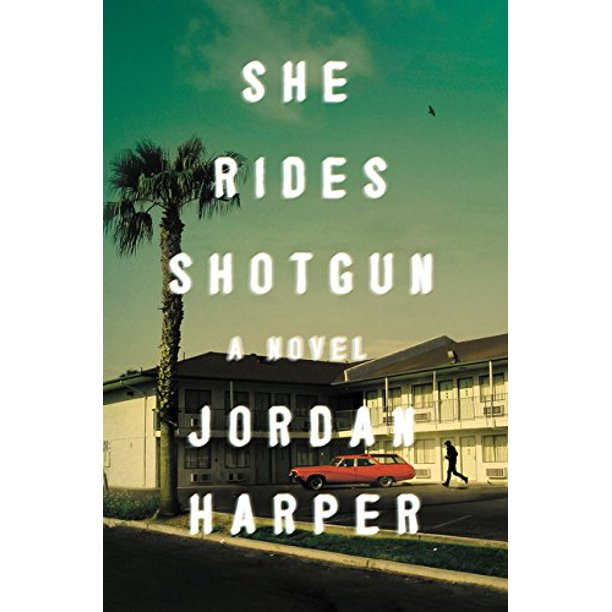
One quick note on the reading front, I’m almost finished with Jordan Harper’s debut novel, She Rides Shotgun. It hits the ground running and doesn’t really let up. No flowery prose, no excessive descriptions, just a down to business crime thriller that I will be shocked not to see adapted into a film someday. Check it out!